

Greene County was officially created in 1796, but its history reaches back through several layers of colonial jurisdiction. During the mid-1700s, both Virginia and Pennsylvania disputed ownership of southwestern Pennsylvania. Virginia briefly governed the region as part of Yohogania County, while Pennsylvania organized nearby lands into Westmoreland County in 1773.
As settlement increased after the American Revolution, Pennsylvania divided its western lands for easier administration. In 1781, Washington County was formed from the southern portion of Westmoreland County. The frontier communities continued to grow rapidly along the Monongahela River and surrounding farming areas. To better serve residents in the southern reaches of Washington County, the legislature established Greene County.
The region had already been inhabited for decades by pioneers pushing westward beyond the Allegheny Mountains. These settlers entered a landscape defined by rolling hills and waterways like Ten Mile Creek and the Monongahela River, which served as vital corridors for movement and trade.
Most of the earliest settlers were of Scotch-Irish, German, and English descent. They arrived in waves during the 1760s and 1770s, often traveling along rough trails or descending the Monongahela River by flatboat.
Although the Quakers, who had established eastern Pennsylvania, didn’t actively push the Scots-Irish settlers to leave their area, their land policies and pacifism regarding the native population created conditions that nudged the relative newcomers toward the western frontier.
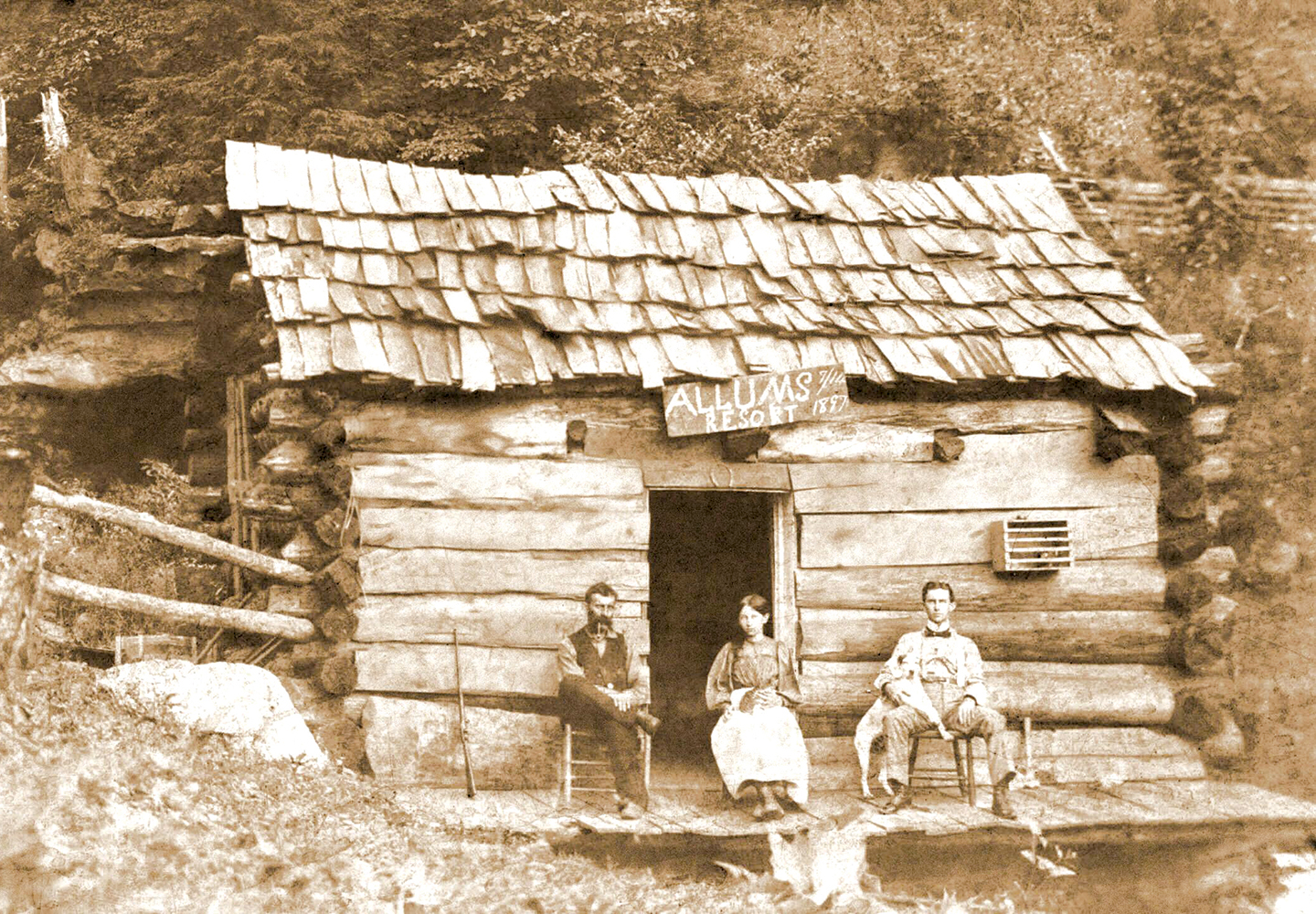
These pioneers were typically subsistence farmers, clearing land, building log cabins, and establishing small homesteads. Communities formed around fertile creek bottoms, where soil was rich and water readily available.
Agriculture dominated early economic life, and the Mon River became an economic lifeline, allowing settlers to transport surplus goods, especially flour and whiskey. Churches were among the first institutions established, often serving multiple denominations in shared spaces. Presbyterian and Baptist congregations were especially prominent. These churches were not only religious centers but also venues for community gatherings and decision-making.
Roads were often little more than dirt paths, becoming nearly impassable in bad weather. Travel was difficult, reinforcing the isolation of many settlements. Over time, however, improved roads and river transport strengthened connections with nearby towns and regions.
In essence, the settlement of the county reflects a broader American story: the westward movement of diverse peoples seeking land and opportunity and the gradual emergence of stable communities from contested ground.
The “first settlers” in what became Greene County weren’t part of a single organized migration. The first wave came around 1763 along Whiteley Creek. Names like John and William Minor, Zachariah Gapen, Justus Garard, George Morris, and Reverend John Corbly were among these early founders.
Familiar names along Dunkard Creek include Augustine Dillinger, Leonard Garrison, and Enoch Enix. Jacob Crow settled along Wheeling Creek.
Approximately four years later a larger “immigrant train” came along Braddock’s Road and included the Swan, VanMeter, Teagarden, Hughes, and Carmichaels families, who settled in the Fredericktown, Pumpkin Run, Jefferson, and Carmichaels areas.
During the years of the American Revolutionary War, settlers in the region faced frequent threats from Native American raids tied to the broader conflict between British forces and American revolutionaries. As a result, families constructed small stockades or blockhouses for protection. One such site, Fort (John) Ryerson, reflects this defensive strategy. Named after a local settler, it served as a refuge during times of danger rather than as a formal military installation.
In addition, a few men from the county joined Captain Michael Cresap’s rifle company in the Continental Army, which went to Boston to serve the cause for independence. They were armed with a few rifles and tomahawks.
Another group was led by Captain James Hook, who raised a militia company at Fort Jackson in Waynesburg. These types of groups were common along the western borders and were called Frontier Rangers.
In 1777, approximately 100 Torries from Fayette County met at the mouth of Whitely Creek and conspired to capture and kill Colonel William Crawford, Colonel John Minor, and Reverend John Corbly. However, James Carmichael gathered reinforcements consisting of a mounted party of 40 men under the command of Colonel Gaddis. They routed the Torries and took 12 of them prisoner.
The prisoners were taken to William Minor’s Fort near Mapletown, where Corbly (who was also the Virginia Justice of the Peace) swore out warrants for their extradition to Winchester for trial. However, because of his religious beliefs he didn’t want to send the men to their execution. He delayed the movement long enough that the men were converted to the independence cause and signed Oaths of Allegiance.
A year later, Virginia Lt. Colonel George Rogers Clark launched his critical expedition to capture key towns and British officers in the Illinois Territory. In early 1788, his men were camped at the mouth of Dunkard Creek near the river. Colonel John Minor recruited men for Clark’s force and supervised construction of the boats that would carry the force down the Monongahela and Ohio Rivers. Lieutenant John Swan supplied the men with rations for the excursion.
By 1781, a number of militias were active in the county under Lt. Colonel Henry Enoch of Clarksville and Major Carmichael, who lived at Muddy Creek.
Another early name is Zadock Springer of Spraggs. He was part of the wave of settlers establishing farms and local identity in the late 18th century. The Morgan families were also among early landholders and settlers moving into the Mon Valley frontier.
Another group led by John Dunkard, a German Baptist “Dunkard” fleeing religious persecution, also settled near the river.
Richhill Township was settled a bit later but still early in county history. Historical records of the time show surnames such as Clutter, Fox, Guthrie, Haines, Hughes, Kerr, King, Lemley, Long, McClelland, McCracken, McCullough, Morris, Patterson, Scott, Stephens, Stockdale, Taylor, Ullom, and Wise.
It’s important to note that these early settlers were not famous individuals but ordinary farming families whose names appear in tax lists and church records rather than national histories. The true heritage of Greene County is that it was built by clusters of interconnected families, many of whom are still in the area today.
Sources included multiple works by noted local historians Dorothy Hennen, William Dusenberry, and G. Wayne Smith