

I recently uncovered something remarkable at the Greene County Genealogical Society Library (as I do every visit). I had come looking for materials related to the upcoming 250th anniversary of the United States, hoping to find dates, records, and perhaps a few compelling anecdotes.
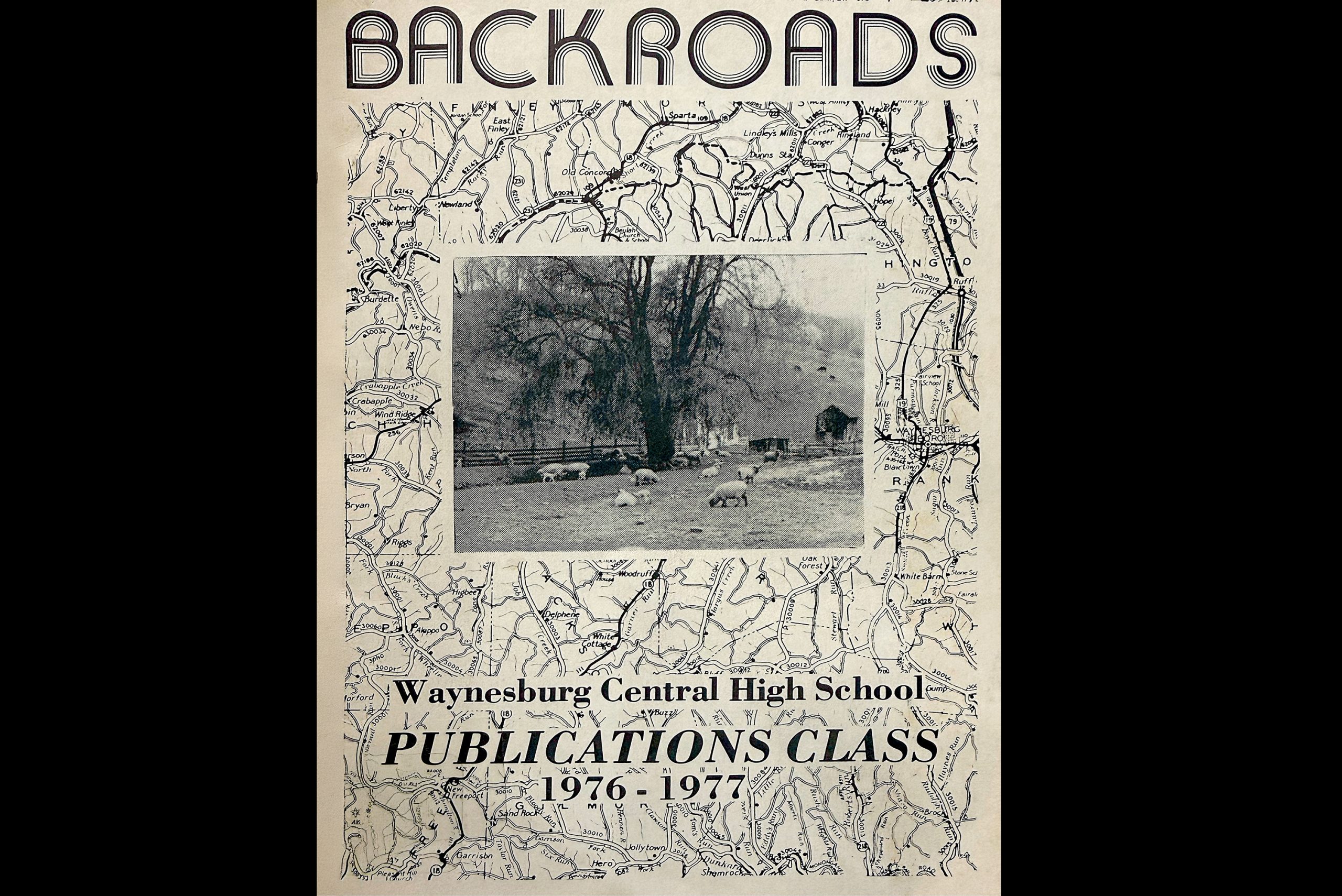
Instead, tucked quietly among aging binders and yellowed documents, I discovered something far more personal: a slim, timeworn publication titled Backroads. Created nearly half a century ago by a Waynesburg Central Publications class, the book immediately drew me in.
It was actually published the year I graduated, but I had no memory of it. The class had been taught by Therese Albert, a respected teacher in the district for years. I had been in Mr. and Mrs. Berryhill’s classes, which would explain my unfamiliarity with the project.
The publication was typed by another WCHS teacher, Margaret Cipcic. Mrs. Lois Riggs was credited with fact-checking research, and to my surprise, my father Jim Moore was thanked for printing the booklet.
Published in 1977, Backroads is a collection of interviews conducted by students with their grandparents and older family friends. Through these conversations, the students captured stories of everyday life in the county—memories of small-town traditions, hard times, simple joys, and the changing landscape across generations. What makes this work so special is its authenticity; these are not polished historical accounts, but voices preserved in their own words.
Holding it felt like opening a door to the past, not through official records, but through lived experience. In the midst of researching a national milestone, I found a deeply local treasure—one that reveals how history is truly carried forward: in stories remembered and shared.
When those students conducted their interviews nearly 50 years ago, their subjects were already reflecting on childhoods and experiences that, in many cases, dated back to the late 19th and early 20th centuries. The voices captured in its pages speak from another era entirely, offering glimpses of horse-drawn travel, one-room schools, and a slower, more close-knit way of life.
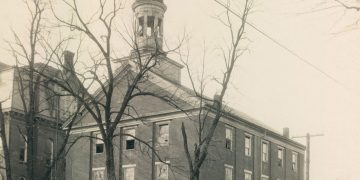
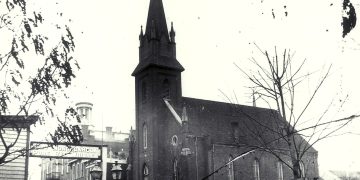
Over the coming months, I will revisit these stories as they were told in a series called Backroads Redux. The stories include everything from farms, railroads, epidemics, old-time radio, hunting tales, bakeries, buildings, bridges, and college dorm gangs.
Althou
gh it might be a cliché, such “recent memories” have become a valuable bridge across time thanks to the dedication of a hard-working teacher with imagination and insight.
The first student story I chose was written by Erin Stockdale (Patterson). Its title was “Pat-a-cake, Pat-a-cake, Baker’s Man.”
She wrote a great piece about her grandfather Charles Phillips. He was raised on a farm along Purman Run. At that time (1977), he had been a baker for 42 years at Hoge’s Bakery. His wares included breads, rolls, and pastries but his passion was decorating special occasion cakes.
Erin explained a baker’s day started at 3:30 a.m. and lasted until 3:00 p.m. (for relatively low wages). However, her grandfather loved the work and became well-known locally for his talent.
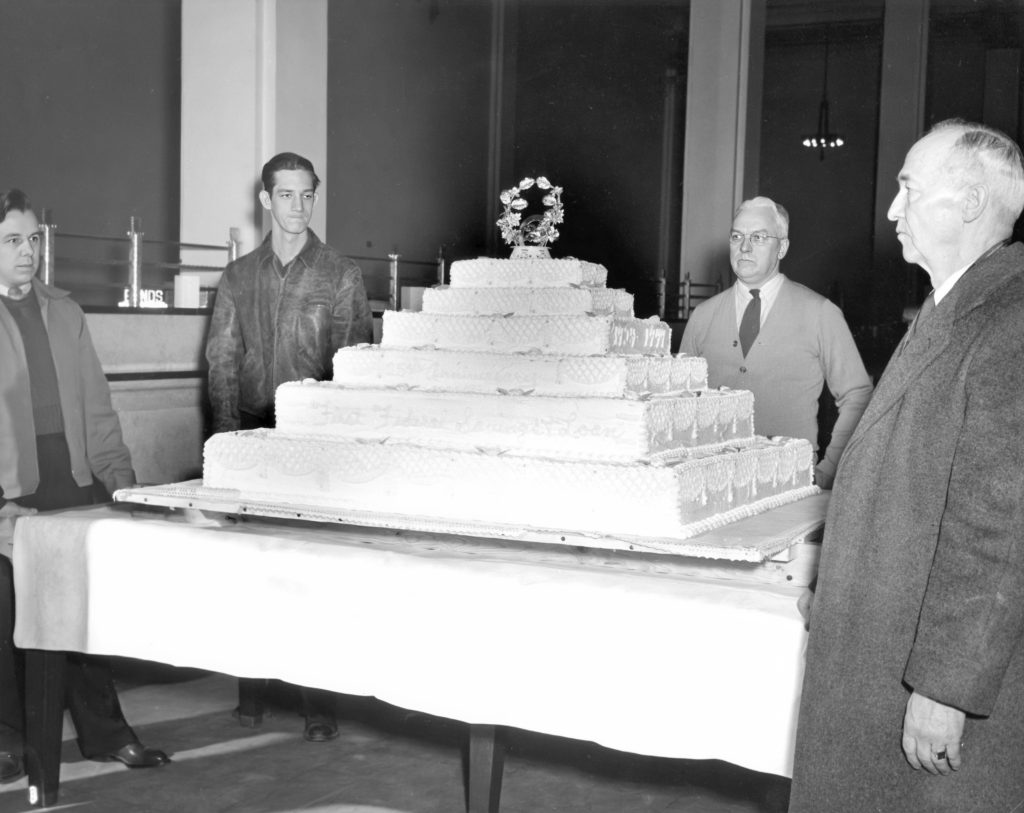
She wrote about a story from her grandfather’s past. In 1949, First Federal was going to celebrate their 25th anniversary with a party. Of course, a large fancy cake would be needed for the occasion. Charles and his friend Mickey Krency were called upon to deliver a cake fit for such an auspicious celebration.
They produced what was said to have been the largest cake ever assembled in town. The work of art was six layers. Each layer was baked and transported separately to the bank lobby. Charles assembled and frosted each layer in a painstaking building process.
According to the story, after all the layers were in place, “the delicate job of decorating the cake began. With his special tools he swirled the frosting into loops and tassels adding extra frosting for roses and leaves.”
Finally, “He wrote with frosting the words ‘25th Anniversary, First Federal Savings and Loan.’ He then placed the candles on the prize 32-inch-high cake.”
The story concludes with a poignant observation that her grandfather is still working his “hard, long job”, but he usually just “does bread and rolls.” His creative decorating at that time was reserved for family birthday cakes where he “puts all his love and attention.”
Thorton Wilder’s Our Town is my favorite play because it captures the quiet beauty and struggles of everyday life, showing how ordinary moments and common people shape the deeper story of American history. The routines, relationships, and reflections of simple human experiences connect generations and preserve the meaning of our daily lives. Thanks to a dedicated and creative teacher, we have a small, local capsule for those memories.