

By 1793, John Antill was operating a flour mill in Carmichaels which shipped some 120 barrels of flour each season to New Orleans via flat boat. In 1822, Mark Gordon, who lived three miles south of Waynesburg began leading packhorses loaded with barrels of whiskey over the Mountains to Winchester, Virginia. He would return with salt and iron.
By the middle of the 19th century, three groups came into existence to promote agriculture, which was the economic lifeblood of the county. They were the Greene County Agricultural and Manufacturing Society (1853 in Carmichaels), the Richhill Agricultural Society (1866 in Jacksonville/Wind Ridge), and the Central Agricultural and Mechanical Fair Association (1869 in Waynesburg).
The first railroad didn’t come here until 1877, and roads were not passable much of the year. Therefore, local millers were necessary and thrived throughout the county.
Over the next century and a half, this agricultural way of life became part of our economic, cultural and, societal DNA. In this issue, we will explore the rich historical traditions of our agricultural past via our local fairs – past and present.
You Can’t Die Happy ’til…
The Jacktown Fair is one of the oldest continuously operating agricultural fairs in Pennsylvania and has been a centerpiece of community life in western Greene County since 1866. The fair began when residents of what was then called Jacksonville (later renamed Wind Ridge) formed the Richhill Agricultural, Mechanical, and Manufacturing Association on July 6, 1866. Organizers sold 280 shares of stock to finance the purchase of grounds, construction of buildings, and creation of a racetrack for the first fair held on October 3 and 4 of that same year.
Originally known as the Jacksonville Fair, the event quickly became known as the “Jacktown Fair.” The fair focused heavily on agriculture and horse racing, with competitions in livestock, produce, baked goods, sewing, crafts, and farm machinery. Traveling attractions such as balloon ascensions, trapeze performers, brass bands, fireworks, and circus acts brought excitement to the rural hills of Greene County.
The fairgrounds developed into a social center for the region during the horse-and-buggy era. Families arrived by wagon carrying picnic supplies and often spent the entire day on the grounds. “Trader’s Alley,” where horses and livestock were bought and sold, became a famous tradition for decades. By the 1920s and 1930s, the fair expanded into nighttime entertainment with gas lighting and later electricity.
Despite wars, epidemics, economic hardship, and modernization, the Jacktown Fair has never missed a year. Today it remains known for its agricultural exhibits, parade, demolition derby, carnival rides, livestock competitions, and the longtime slogan: “You can’t die happy ’til you’ve been to the Jacktown Fair.”
The origin of that phrase can be traced to the August 7, 1931, issue of the Waynesburg Democrat Messenger. The exact phase used in that edition said, “Visit Jacktown and die happy.”
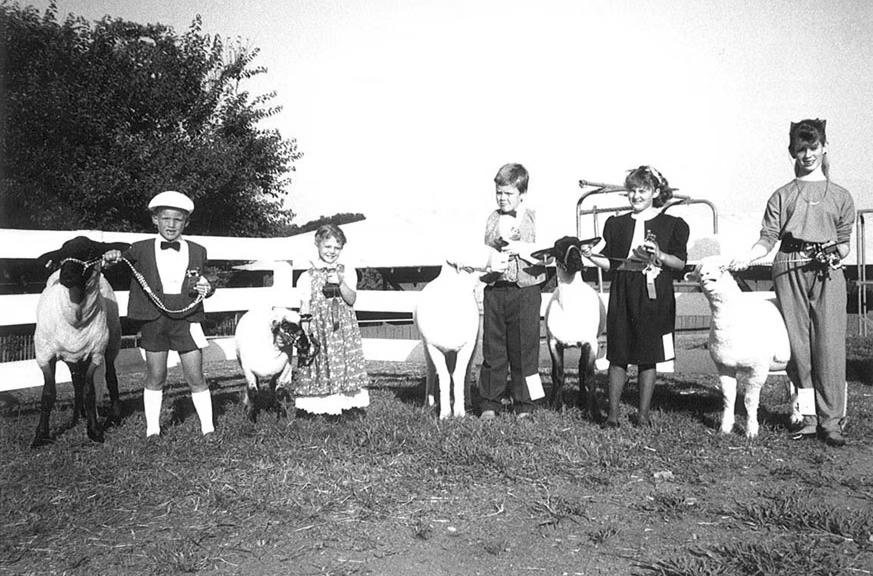
The fair throughout much of the rest of the 1800s and early 1900s consisted of horse racing as the main event, and there were of course the contests that created the inevitable bragging rights of farmers, homemakers and craftsmen. Entries were taken in a large variety of categories – livestock, linen and clothing, cotton, leather, needlework, farm machinery, grains, produce, arts, furniture, flowers, bread, preserves, and even horseshoes.
Attractions in the early years included an “international circus,” balloon ascensions, fireworks, trapeze and other aerial acts, tight rope walkers, and many different bands. The first mention of rides at the fair was reported in the True Blue newspaper in 1886, stating that two large swings “did a good business.”
A noteworthy story of entertainment comes from 1893. Madame and Professor Zeno were performing a balloon ascension at the fair, in which the balloon caught fire. Madame Zeno was able to escape just in time, as the balloon was caught by the wind and blown into the side of a house 500 yards away.
Attendance has always been overwhelming for such a rural area. In 1879, the Wheeling Daily Intelligencer reported that, “Colonel Bridges estimates the crowd at the Jacktown Fair between 5,000 and 6,000 people.” People from Washington County and “Little Virginia” attended even the very first fairs.
In the 1920s, advertisements promoted a “night fair” at Jacktown, as it was one of the earliest in the area to feature lighting. In 1939, the gas lights were replaced with electric ones.
In 1931, the concrete road from Waynesburg to Jacktown was completed. This was great for travelers, but drastically hurt the three hotels (Bryan, Pettit, and Taylor) in Jacktown. During the fair, these hotels were bursting at the seams, often having to hire additional help for the week of the fair.
In 1932, the fair featured a wedding as the main event on Friday evening. Lawrence Ray Wood of Holbrook married Alverta McClelland of Wind Ridge. The wedding was arranged and sponsored by event planners Boyd and Worth of Pittsburgh. They sponsored the nuptials, paying for everything including advertisement, in exchange for a 50 percent cut of the gate proceeds. The two were happily married for the rest of their lives.
Throughout the 1930s and 1940s, many improvements were made to the fair under the influence of Frank Ross, a native of Wind Ridge who moved to Chicago to become the very successful owner of the Jewel Tea Company. He was very generous to the fair and the community.
The president of the fair in the 1940s was Ross Burns, a relative of Mr. Ross, and their cooperation was vital to the development of the event. During WWII, the fair was limited yet still survived. Sadly, horse racing came to an end in 1946, and horse pulls became the new main event.
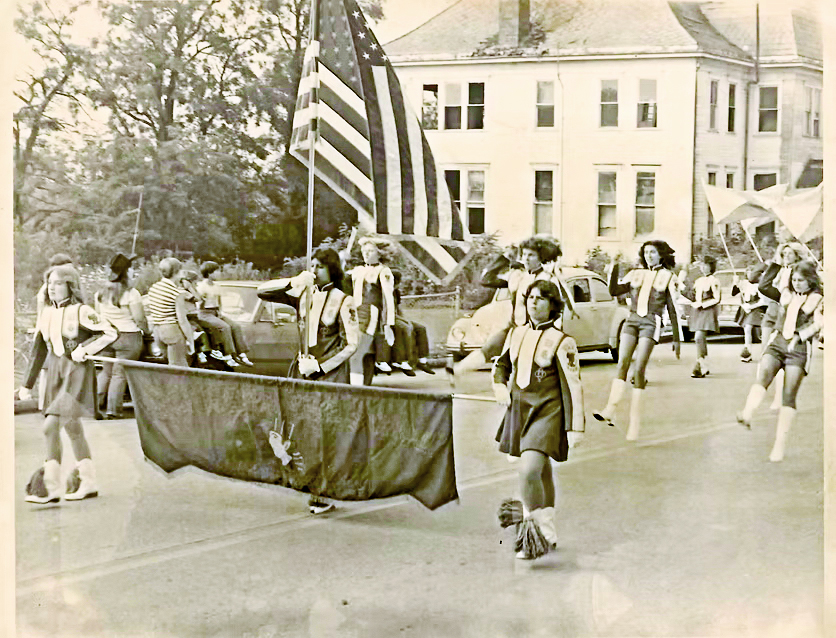
The 100th fair anniversary celebration in 1965 was the first five-day affair and the beginning of the traditional fair parade. It was also the first year of the fair queen contest.
Clear back on October 1, 1879, The Waynesburg Messenger captured the true spirit of the Jacktown Fair to this day. “If there was nothing on exhibition except the large crowd of people, it would pay to spend thirty-five cents and a half day on the fairgrounds. It is worth all it cost, and more, merely as a grand reunion and day of recreation and social employment.”