

Although I wrote a book on the history of sports in Greene County, I had no doubt there would be omissions and oversights. Covering multiple sports and levels over 150 years is impossible – even in a county as small as ours.
Fortunately, our readers often share some of these overlooked nostalgic tales with me. One such story was so interesting I felt it deserved a retelling. (Thank you to Bob Dugan)
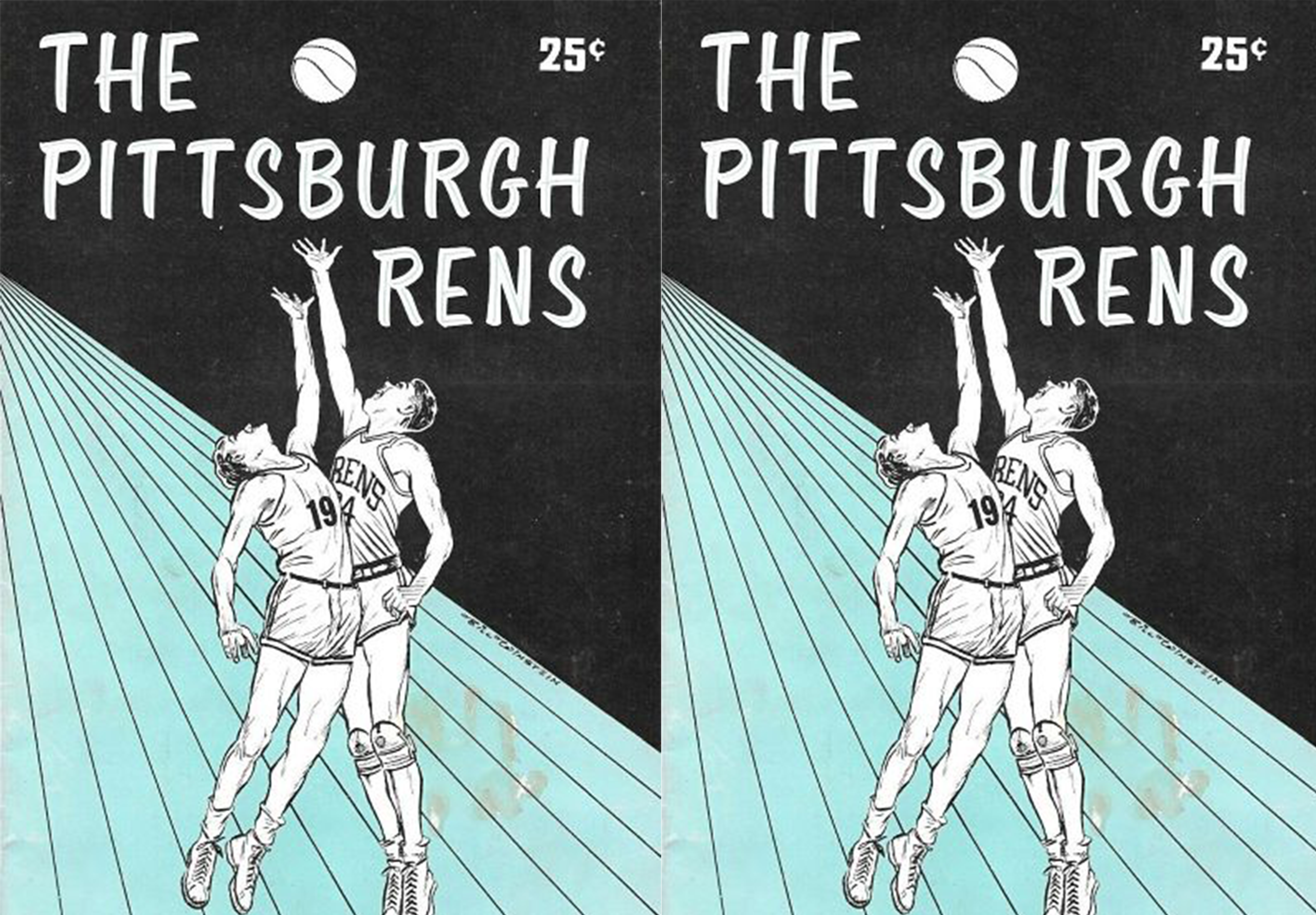
The Pittsburgh Rens were a charter member of the American Basketball League (1961-63) The ABL was one of the most fascinating “what-if” stories in professional basketball. Although it lasted only two seasons, its influence on the modern game was tremendous.
The league was founded by Abe Saperstein, the owner of the Harlem Globetrotters. Saperstein had hoped to obtain an NBA franchise after the Minneapolis Lakers moved to LA in 1960. When that opportunity disappeared, he created a rival league.
The ABL began play with eight franchises spread across the country: the Chicago Majors, Cleveland Pipers, Hawaii Chiefs, Kansas City Steers, Los Angeles Jets, the San Francisco Saints, The Washington Tapers, and the Rens
The ABL was ahead of its time. Among its innovations were the three-point shot and a wider free-throw lane, to reduce the dominance of big men near the basket. Both ideas were eventually adopted by the ABA and (later) the NBA.
The Pittsburgh team took its name from Pittsburgh’s urban renewal “Renaissance” program while also honoring the New York Renaissance (“Rens”) black professional basketball team of the 1920s and 1930s. The Pittsburgh Rens played their games in the brand-new Civic Arena.
The league’s biggest star was the Ren’s Connie Hawkins. He had been blacklisted from the NBA because of an unfounded connection to a college gambling scandal. Hawkins later became an NBA All-Star and Hall of Famer.
The Rens’ owner was Lenny Litman, a prominent Pittsburgh promoter who had been a star basketball player and captain at Waynesburg College. He needed to fill out a roster around Hawkins, who had cost him a pretty penny to sign.
One of the players he signed was Wayne Hightower, a 6-foot-8 forward from the University of Kansas. Hightower was one of the top players in the country but was facing financial and academic difficulties prohibiting his return to school. At the time, the NBA required a player’s class to have graduated to be draft-eligible.
The ABL had no such rule and offered Hightower a chance at professional ball. However, the Kansas City Steers protested that the Rens had violated their territorial draft rights. This system was implemented to try to improve attendance in the fledgling league by rostering local players.
Immediately, Litman came up with the “Litman Loophole.” He held an open tryout for local players at his alma mater to complete his roster. He had used his contacts at the college to schedule the gym and even signed former Yellow Jacket star Jack Barclay to a contract.
However, the real plan was to have Hightower enroll at Waynesburg College to play a few games, making him eligible to be signed by Pittsburgh.
Unfortunately for Litman, at the last minute, Hightower signed with Real Madrid in Spain for that season. He led the Spanish League in scoring and helped lead the team to the Spanish championship while reaching the European Cup final. He was the first American star to establish a reputation in European basketball.
The following year, he was selected 7th overall in the NBA Draft by the San Franciso Warriors. He spent 10 years in the NBA and ABA before serving as vice president of the ABA Players Association, advocating for players’ rights.
Historians often regard Hightower as a pioneer. He was the first American star to achieve success in Europe, was one of the first NBA players to sign with the ABA, and was an important voice for player rights during a transformative era in professional basketball.
It’s too bad he couldn’t have played at least one game for the Orange and Black.