

David is the president of the Cornerstone Genealogical Society. For those interested in local history or genealogy, the Society has access to a searchable Waynesburg Republican data base, as well as other Greene County newspaper microfilm.
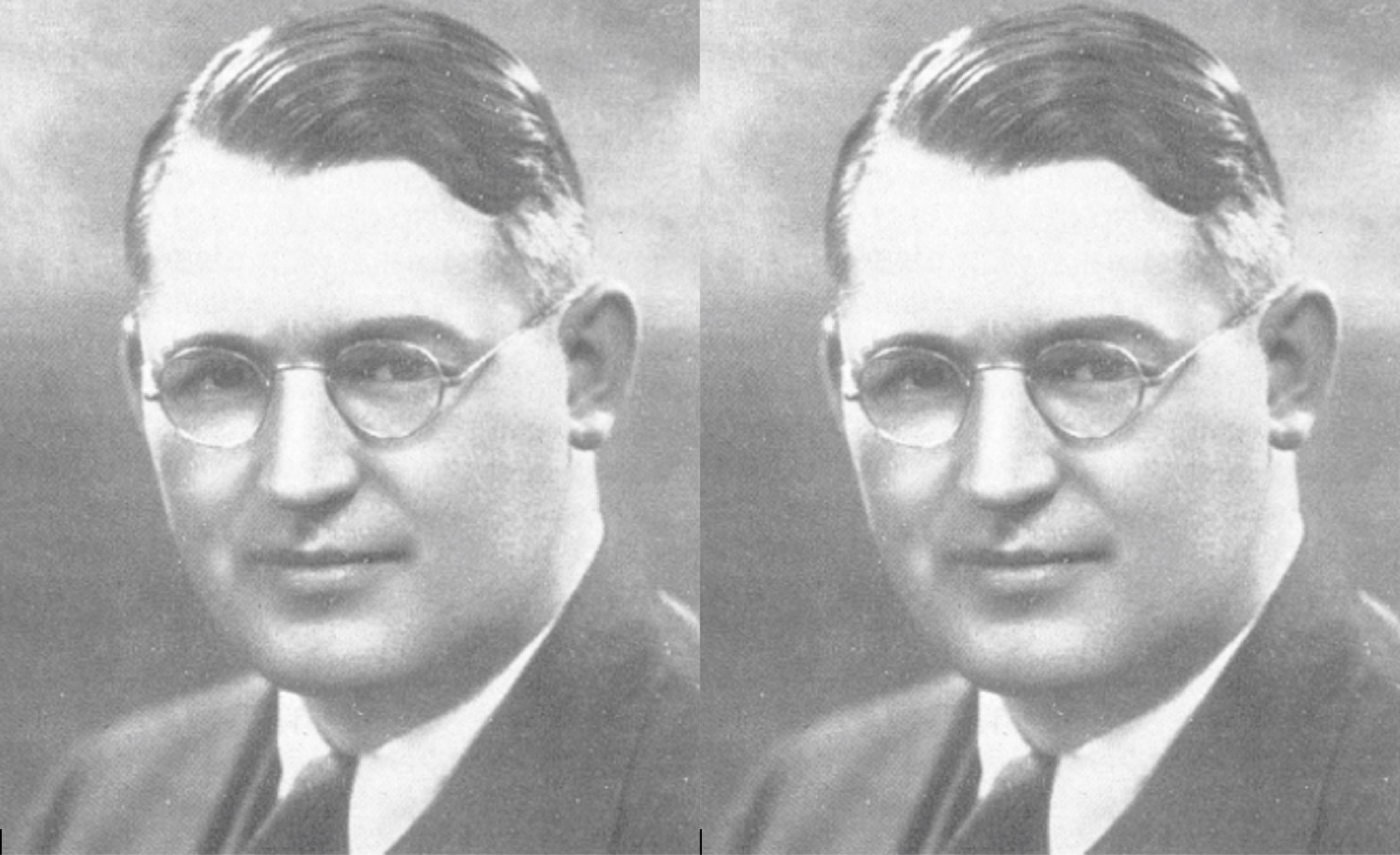
A case can be made that Frank N. Wolf, certainly the first of the great Greene County coaches, was a motivator, tactician and mentor without peer.
He was hired in September 1921 at the age of 24 by acting president Paul R. Stewart to revive the athletic program at Waynesburg College, which had been suspended during the first World War and the Spanish Flu pandemic of 1918.
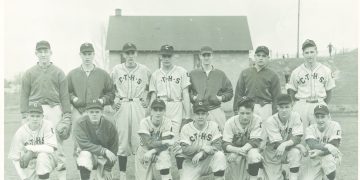
The College’s enrollment was down to 66, and it faced the possibility of closing. Wolf quickly established intercollegiate football, basketball, and baseball schedules, which served to generate interest in the College, and enrollment rebounded. Playing a full slate against quality opponents, the 1922 football team posted a 6-4 record, by far the most wins in school history up to that point.
Wolf, however, was pushed aside in 1923 by local boosters who thought a more experienced coach could propel the College into the football limelight. He landed a teaching and coaching position at Williamson (W. Va.) High School, which he guided to a state football championship in 1927. A fine four-sport athlete himself at McKeesport High School and Penn State, Wolf moonlighted during these years as a professional football player for the Charleston Senators and Logan (Ohio) Wildcats.
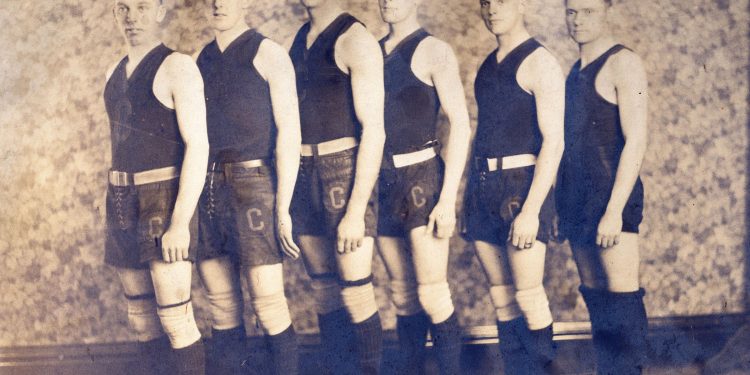
After the Waynesburg community’s pipedream of big-time football was a bust, Frank “Butch” Wolf returned to the College in 1928 as Athletic Director and football and basketball coach. Playing home games in the Waynesburg Armory, Wolf’s basketball teams posted a 208-141 record over 17 seasons against top opponents. The Armory, with a 600- person capacity, was packed to the rafters for must see competitions as the area weathered the Great Depression.

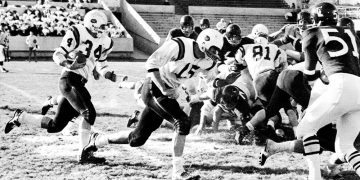
Wolf’s football teams compiled a 65-63-10 record over 16 seasons. This is somewhat misleading in that the “Wolfpack” played several games each fall against the major college football powers of that era–games they had virtually no chance of winning–as a way of financing the athletic program.
They were 0-10 against excellent Duquesne teams, for example, and 0-3 versus Pitt, all games played in Pittsburgh. Wolf and his boys, significantly outmanned, garnered respect for their thorough preparedness and competitive spirit. After holding Pitt to a 14-0 score in 1935, the Waynesburg effort and Wolf’s coaching were lauded by Hall of Fame Pitt coach Jock Sutherland, who called the sheer defensive power of the Waynesburg club “little short of a revelation”.
Famously, Wolf’s teams also traveled to State College where they beat Penn State in 1931 and 1932 in only contests played between the schools. The star in both was fleet-footed halfback
Rab ”the Rabbit” Currie. The 1932 season was Wolf’s finest: an 8-1 record and recognition as Eastern Minor College Champions.
It was after a winless 1928 that Wolf instituted the tradition of “The Last Lap.” At the last practice, he recognized each senior by name, wanting to mark the end of this significant chapter of their lives. He wanted them to reflect on the scope of their commitments as players –adversities faced and overcome, lessons learned, bonds formed–as they jogged together around the cinder track that encircled the football field. At the end, the seniors were applauded by the underclassmen. The Last Lap tradition endured into the 1950s, years after Wolf’s coaching career ended.
Consider the four-game series played between Waynesburg and Fordham University in New York City (1936-1939). The Rams were national title contenders in those years and played virtually all their games as the home team, sharing the Polo Grounds–a major league venue seating some 55,000–with the NFL’s New York Giants. During that era, college football had a more prominent place in the sporting scene than the professional game.
In 1936, a new stadium–capacity 22,000, a project of the Works Progress Administration–was completed on Randall’s Island in New York’s East River. Fordham was to use this venue to host what were essentially tune up games against small college foes, and it was here that the Yellow Jackets made their debut in the Big Apple on October 17, 1936.
Fordham’s formidable line was dubbed The Seven Blocks of Granite and included legendary future coach Vince Lombardi at right guard. The game was played on a muddy mess of a field, and the Jackets won plaudits for holding the Rams scoreless in the second half, while scoring a touchdown of their own. The final score of 20 to 6 was counted as a moral victory for the “hard fighting Waynesburg College eleven”.
Unfortunately, the games in 1937 and 1938 were not competitive. Fordham was coached by Jim Crowley–one of the famed Four Horsemen on Knute Rockne’s Notre Dame teams of the 1920s. The Rams would lose only one game total during those two seasons, a 24-13 loss to top-ranked Pitt in 1938.

Waynesburg had to be content with cashing participation checks. According to William Dusenberry’s History of Waynesburg College, the College received $2,750 for the 1939 game, a sum equal to roughly $75,000 today.
The 1939 game, played on September 30, was to be the first American football game ever televised. The Yellow Jackets received the opening kickoff and, on the third play from scrimmage, halfback Bobby Brooks tested the left side of the line behind the blocking of Jack Wiley and Nicky George. Wiley was from Richhill Township High and a future Pittsburgh Steeler. George was from Waynesburg High School and was an All-American selection in 1941. “In a fancy exhibition of broken field running, Brooks out speeded and outmaneuvered the Ram secondary on a 63-yard run. John Stefanik kicked the extra point.”
(Stefanic, who was to have a noted career as a taskmaster math teacher at Jefferson-Morgan High School, is reported by former students to have opened his first class each year with a brief account of that first televised score. It was not to be mentioned again for the balance of the school year.)
Brooks’s electrifying scamper was a wake-up call for the heavily favored Rams who rebounded to take a hard fought 34-7 victory. The game was attended by 7,000 and reached an estimated 1,000 television sets in the New York City area. There was but one announcer and one camera. No instant replays or Sportscenter recaps.
The Jackets were “praised by every New York writer who covered the game as one of the most courageous and best coached small college teams ever to appear in the metropolis”. They would lose the next week to Duquesne at Forbes Field before going undefeated the remainder of their schedule. That 1939 team was Western Pennsylvania Minor College Champions and stands alongside the 1932 squad as the two best of Wolf’s tenure.
Pearl Harbor intervened at the conclusion of the 1941 season, and Wolf, a “doughboy” who saw service during World War I, turned his attention to the War effort. He was director of physical training for the Ninth Army Air Force Detachment which was stationed at the College. After the War, he continued as the chief of training in the U.S. Veterans Administration in Pittsburgh.
In April 1949, he was set to return to the Waynesburg College faculty after taking advanced courses at Pitt. He and his wife, Thelma, were preparing to relocate from Mt. Lebanon when he died suddenly, at 52, of a cerebral hemorrhage.
His memorial service in the college chapel and his funeral at First Presbyterian were attended by legions of his friends, associates and former athletes–many of whom had joined the coaching and teaching professions. Prexy Stewart spoke at both gatherings, highlighting Wolf’s vigor and fighting spirit: “He willingly stepped into the storm of life and was able to transmit his own qualities of determination to those coming under his influence”.
[All quotations from the Waynesburg Republican.]