

Greene County just received $15.2 million from the annual natural gas impact fee according to recently released figures from the Pennsylvania Public Utility Commission. How these fees are spent has long been a point of contention among politicians and residents.
Since 2012, the county has received millions of dollars from this source of income. For those who are unfamiliar with this system, a brief summary may be in order.
Overview
Act 13 money comes from Pennsylvania’s unconventional gas well impact fee. The fee is paid by the companies operating those gas wells. Unlike a severance tax tied directly to production, the fee is based largely on the number and age of wells and energy market conditions. A portion is returned to counties and municipalities experiencing drilling activity.
Revenue is distributed to local governments to address drilling-related impacts, fund infrastructure, environmental projects, and community needs. In this article we will discuss how the County uses the money. In Part II next month, we will explore how local municipalities use the funds.
“Unconventional” gas wells are those that extract natural gas from rock formations where the gas is trapped tightly and does not flow easily. In Pennsylvania, this usually refers to shale formations such as the Marcellus Shale and Utica Shale.
These wells typically use horizontal drilling and hydraulic fracturing (fracking) to release the gas. By contrast, conventional wells tap reservoirs which can produce with less intensive extraction methods. The impact fee applies specifically to unconventional wells because of the environmental and community impacts associated with modern shale development.
The Act 13 debate was extremely contentious from the beginning. Supporters of severance taxes said the public should capture value from these nonrenewable resources and help offset infrastructure and environmental impacts. Opponents argued severance taxes could discourage investment, reduce competitiveness with neighboring states, and threaten jobs.
In comparison, Pennsylvania coal companies are taxed through a combination of state and local taxes. However, unlike West Virginia, Kentucky, and Wyoming, the commonwealth does not impose a statewide severance tax based on actual coal extraction. Instead, coal producers pay a variety of other taxes and fees.
Local Impact
According to a statement from Jared Edgreen, Chairman of the Greene County Commissioners, “Since 2010, Greene County has lost approximately 300 million dollars in assessed coal tax revenue, which has greatly affected our “corporate” county operations and the county-at-large. At the advent of the Marcellus Shale drilling in Greene County, the county was teetering on raising taxes or cutting vital programs.”
For Greene County, Act 13 became a significant new revenue stream. By 2018, Greene County was the fourth-highest receiving county in Pennsylvania, reflecting the concentration of drilling activity in the county.
Edgreen continued, “Act 13 has had a significant impact on Greene County by ensuring that communities hosting natural gas development receive funding to address the needs that come with that drilling. County, townships, and boroughs receive this funding and cannot spend these funds arbitrarily as they are required to adhere to 13 spending categories only.”
A Useful Way to Think How the Money Can/Should be Spent
Immediate impact: roads, emergency response, public works.
Community stabilization: human services, local government capacity.
Long-term legacy: recreation, planning, technology, public facilities.
One of the more surprising takeaways is that Greene County’s public reports suggest the county often used a significant share for human services, public safety, and county operations, while municipalities frequently focused on physical infrastructure and local capital projects.
Ten County Projects You Can Actually See
For most residents, million-dollar figures can feel abstract. What does Act 13 money actually look like? Here in Greene County, the answer is found not in one giant landmark project but in dozens of improvements spread quietly across the county – roads repaired, facilities modernized, recreation expanded, services strengthened, and systems upgraded.
1. County Bridges That Stayed Open
Before Act 13, bridge replacements and rehabilitation often depended on long grant cycles and delayed capital planning. Impact fee dollars allowed additional flexibility to address deteriorating bridge infrastructure and leverage outside funding. Not glamorous work, perhaps, but certainly essential.
2. Municipal Roads
Heavy industrial traffic accelerates wear on township roads throughout drilling regions. Rather than relying entirely on local tax bases, municipalities used impact fee dollars for resurfacing, reconstruction, drainage improvements, culvert replacements, and transportation upgrades.
3. The County’s 911 Emergency System
Emergency response rarely attracts headlines—until it’s needed. Act 13 revenue supported county emergency response capability, including 911 systems and communications infrastructure.
4. Improvements at the Courthouse
Historic buildings require expensive upkeep. Courthouse roof work and facility upgrades were among projects supported through impact fee revenue. These are the types of investments that often get postponed for years because they compete with more immediate needs.
5. The County Prison and Public Safety Upgrades
Public safety has become one of the county’s largest spending categories. Over several allocation years, millions of dollars were directed toward law enforcement, public facilities, prison improvements, and operational support.
6. Recreation
Not all Act 13 dollars went into government operations. Some money went to recreational trails, pool-related projects, and improvements connected to the Wisecarver Recreation Area. Those investments reflected a broader strategy, converting a temporary energy boom into quality-of-life improvements that will remain after drilling slows.
7. Fairgrounds Improvements
For agricultural counties, fairgrounds are more than event spaces. They host youth programs, exhibitions, and community gatherings.
8. Food Security and Human Services
One of the least visible uses of Act 13 dollars involved people rather than infrastructure. Support for Human Services, Children & Youth programs, and food security efforts, challenge assumptions that impact fee revenue was only about roads and construction.
9. Mapping, Technology, and Smarter Planning
Act 13 money also funded projects many residents never physically see but benefit from regularly. Examples included: aerial imagery and mapping upgrades, assessment modernization, communications improvements, information technology, paperless government initiatives, and planning updates. These projects aimed to make county government more efficient and better prepared for future growth.
10. Investing Beyond the Boom
Comprehensive planning, strategic development initiatives, housing and blight reduction efforts, and partnerships with municipalities also received funds.
The County’s Plan for the Most Recent Money Received
Commissioner Edgreen laid out the broad strokes of how the County plans to use the latest distribution.
“First, instead of cutting vital programs in the county, Act 13 serves as a tool to replace the lost coal tax revenue without raising taxes to ensure programming in Parks and Recreation, Kids Summer Day Camps, Penn State Extension services, Human Services, court-related operations, and bridges and infrastructure for our constituents.”
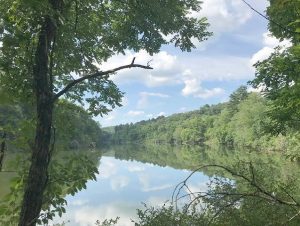
Wisecarver Recreation Area
“Second, the distribution will be used to maximize and stack grant monies from state and federal sources, private foundations, and industry partners. Once such project is the West Greene Waterline Extension. The county has received a federal earmark grant of 2.5 million dollars and has applied for a Redevelopment Assistance Capital Program Grant from the Commonwealth to match those funds.
Additionally, industry partners will also help with the project, but the county will have to employ matching funds.
Another project that may use Act 13 dollars is the preservation of the Greene County Fairgrounds. The county received a Local Share Account (LSA) Grant from the state and is applying for an Appalachian Regional Commission (ARC) POWER Grant for the revitalization of the fairgrounds to become a regional hub for Agro-Tourism.
Third, the county created a small grant program out of the Act 13 dollars for local emergency management agencies, non-profits, and social services to continue vital services for the surrounding community.
Fourth, the county may apply Act 13 funds to expand parks and trails, environmental initiatives, and protection of our natural resources.
He concluded, “The county is also more than happy to work with the townships and boroughs on projects utilizing Act 13 dollars while stacking grants.”
Next month: Act 13 Municipal Spending