

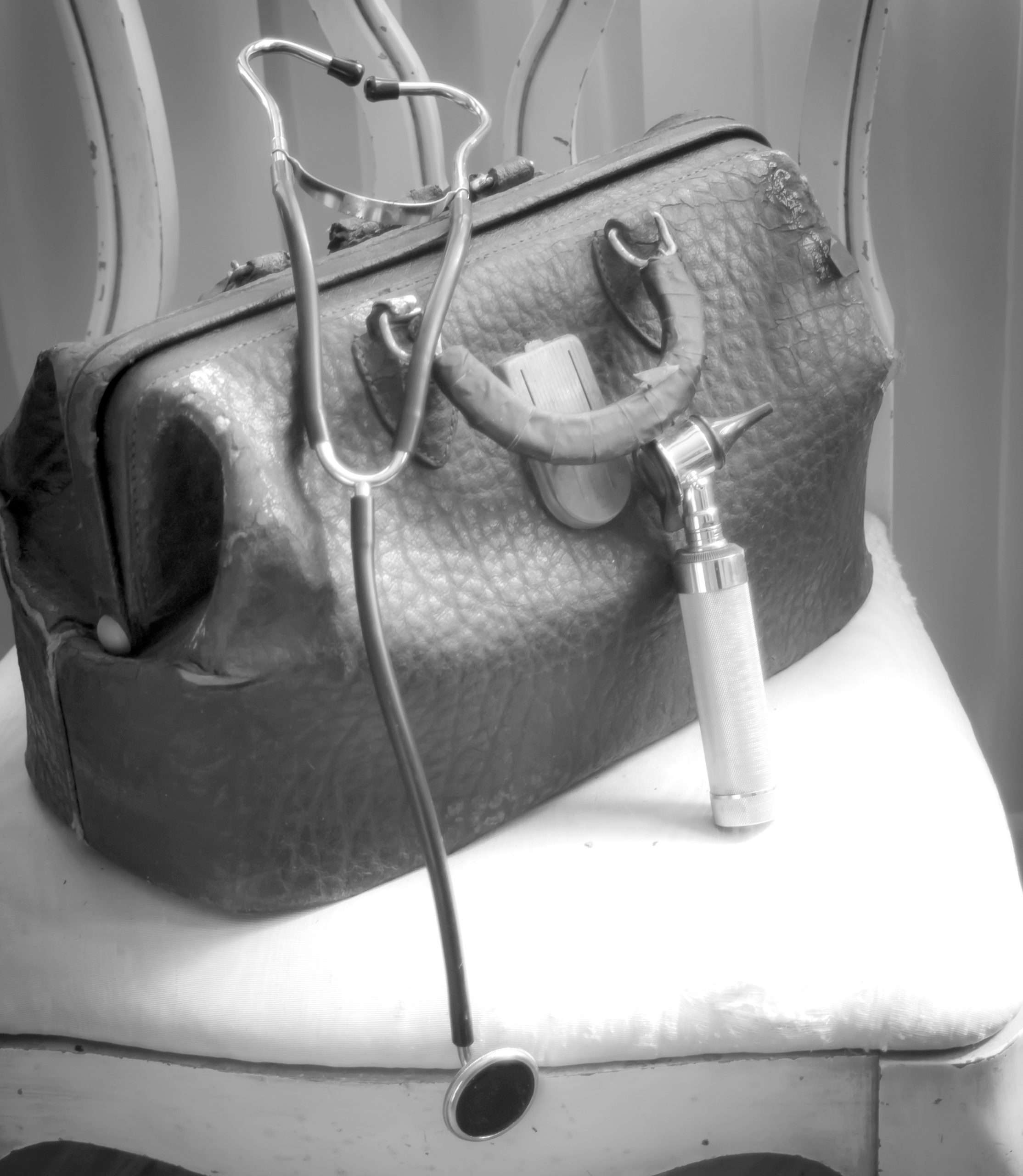
For generations, the small-town doctor stood as one of America’s most reassuring figures – black bag in hand, available at any hour, and woven into the intimate fabric of community life. In literature and film, this archetype became shorthand for steadiness, discretion, and moral clarity. In Our Town, Dr. Gibbs makes his rounds through Grover’s Corners not as a distant professional but as a neighbor who knows every family’s joys and sorrows. In numerous television shows like The Waltons and movies like Field of Dreams, the town doctor is part of the gentle moral landscape of rural America. He is a quiet guardian of continuity and care. Across decades of storytelling and in real life, the local physician symbolized trust rooted in familiarity.
Throughout Greene County anyone over the age of forty can certainly remember a local doctor from their past who would fit that archetypal role like they were right out of central casting.
Our readers responded with overwhelming enthusiasm to our online post asking them to share their memories. As we expected, these shared stories were humorous and heart-warming and embodied a bygone era that is slowly fading in our collective memories.
Three of these medical legends were very present in my youth. My mother was an OB nurse who stood alongside Dr. Mering as he delivered half of Greene County.
As a former athlete at Waynesburg Central and Waynesburg College, I am a member of the very large club that was treated by Doc Patterson. Every athlete of two generations has a great story about Doc’s colorful personality and treatment methods. He was a perfect fit for those athletes and those times.
On the flip side was the gentle nature of Dr. Greenlee, who hosted an annual end of season dinner at his house for the players, cheerleaders, and staff of the Raiders’ football team. This was a tradition that lasted almost three decades.
Our readers also contributed a vast repository of county doctors who created generations of memories. The names are familiar to anyone of a certain age. Sonneborn, Brooks, McNeely, Gray, Clendenning, Huffman, Fowler, Abner, Stitt, Gray, Kumar, Buterbaugh, Jack, Martin, Ring, and Marisa.
Most of the memories extolled their countenances with descriptions such as “always joyful”, “kind,” and “pleasant.” These men covered small towns like Carmichaels, Greensboro, Rogersville, Mt. Morris, and Kirby.
Their services were all-encompassing. Many provided house calls, and they brought “the pharmacy” with them. In addition to giving shots, a few even brought presents for children. One reader recalls Dr. Gray bringing her a baby buggy as a child.
I also found it fascinating more than one of these men treated the family pups during house calls. They were truly concerned about the entire household.
One Kirby resident shared that Dr. McNeely delivered her in the house where she still lives. Some family members continued their chores on the farm that day before being greeted with the newborn’s cries as they came in for dinner.
The respondents also swore by the medical acumen of these men. Several stories told of how the diagnostic prowess of their doctor saved their lives or prevented serious complications. One reader shared a story of how Dr. Abner told her sister she was pregnant before the woman had any idea.
The final element that stood out in these stories was simply access. People could walk into their doctor’s office without an appointment and simply wait their turn. Today, it might take weeks or even months to see a doctor (if your insurance company says it’s ok).
Today, those types of men have faded from our landscape. Most independent practices have been absorbed into sprawling hospital systems. House calls have yielded to urgent care chains; personal relationships have given way to electronic portals and rotating providers. Economic pressures, consolidation, and workforce shortages have reshaped rural medicine into something more corporate and less personal. As small towns struggle to hold onto schools, newspapers, and local businesses, the disappearance of the traditional family doctor marks not just a shift in health care, but the erosion of a cultural ideal once central to American life.