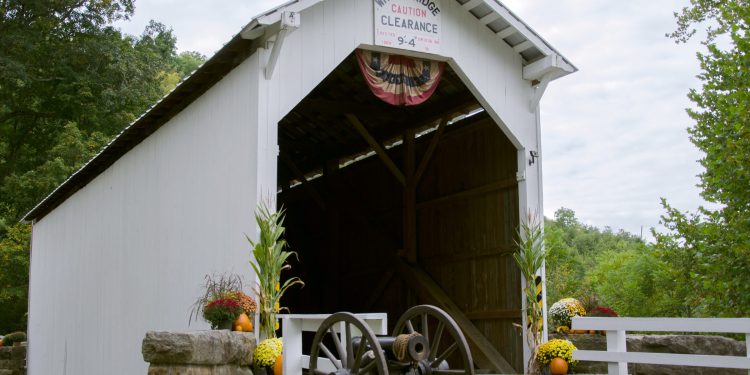


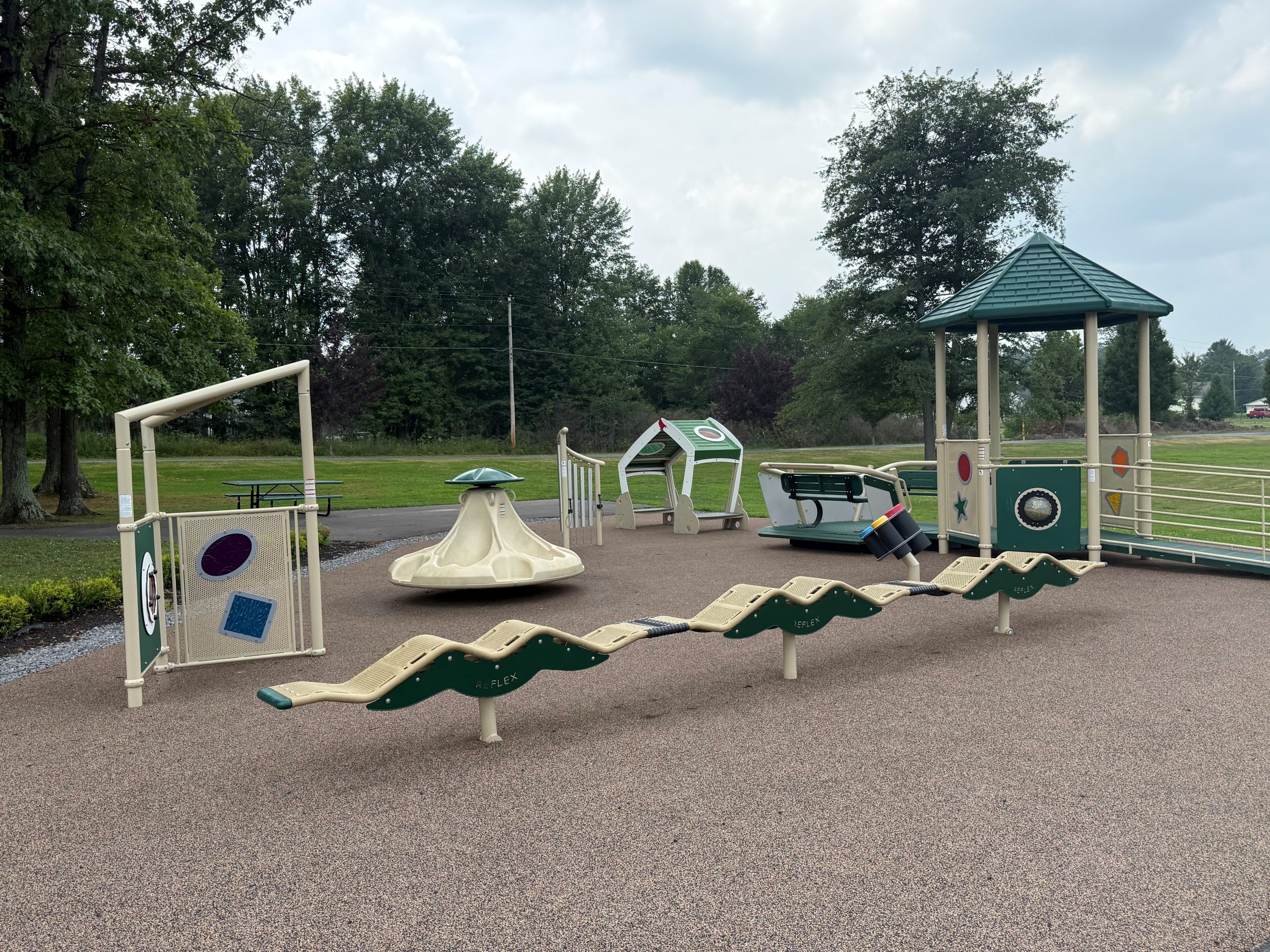
This new interactive playground at Wana B Park was purchased with Act 13 funds.
Last month, we explored how Greene County has invested millions of dollars in Act 13 impact fee revenue to strengthen countywide services and infrastructure. This month, the focus shifts closer to home—to the municipalities where the drilling takes place. In our townships, Act 13 dollars have helped pave roads, replace bridges and culverts, purchase emergency equipment, improve parks, and upgrade public facilities. While each township has chosen projects to meet its own needs, together they tell a larger story of how natural gas impact fees have become a lasting investment in our communities.
The county has distributed portions of the funds to all 26 of its municipalities, allowing townships and boroughs to undertake projects of their own. Under Act 13’s formula, municipalities receive more when they: have unconventional wells inside their borders, border municipalities with wells, have larger populations, and maintain local road mileage. That meant the largest municipal beneficiaries in Greene County generally aligned with the most active gas-development areas.
Five Greene County Townships Among Pennsylvania’s Act 13 Leaders
When Pennsylvania created the Act 13 impact fee in 2012, few Greene County residents imagined that several of their townships would soon rank among the biggest recipients of the money in the entire Commonwealth.
According to a Pennsylvania Legislative Budget and Finance Committee review of Act 13 distributions through 2023, five Greene County townships ranked among the 10 Pennsylvania municipalities receiving the most Act 13 money. Center Township led the state, followed by Cumberland Township.
Morris, Franklin, and Morgan Townships also landed in the statewide top 10. It’s a reflection of the tremendous natural-gas development that has taken place here.
The money has not simply sat in township accounts. Act 13 permits municipalities to use the funds for a broad range of purposes, including roads and other infrastructure, public safety, emergency preparedness, environmental projects, recreation and community facilities.
Center Township, the state’s top municipal recipient through 2023, has used its resources in the context of the township’s roads, public services and infrastructure. Its recent Act 13 distribution alone was substantial enough to provide meaningful support for township projects and reserves. The township has also pursued recreation improvements, including work associated with its parks and a new concession facility.
Cumberland Township has perhaps the most visible record of early Act 13 spending. Township allocations have supported roads and road equipment, police and emergency services, volunteer fire departments, park improvements and community facilities. Among the projects supported over the years were improvements at Wana B. Park and assistance for the King Coal softball field in Carmichaels.
Morris Township has directed its resources toward the practical needs that come with maintaining a large rural township such as roads, equipment, public safety and other infrastructure. The township’s substantial distributions have given supervisors the ability to address capital needs without relying solely on property-tax revenue.
Franklin Township has likewise benefited from the impact fee. One example of the broader use of Act 13 resources in the township is the partnership involving the Franklin Township Sewer Authority and improvements associated with sanitary sewer infrastructure. In 2024, $160,344 was used for Crawford Park Playground Improvements, continuing the township’s investment in quality-of-life projects.
Morgan Township, the fifth Greene County municipality in the statewide top 10 through 2023, illustrates another important aspect of the program. For a rural township, impact-fee revenue can provide the financial flexibility to tackle road, equipment, emergency-service and infrastructure needs that otherwise could require years of saving or additional local taxation.
The five statewide leaders are not the only municipalities to benefit from the program. The remaining townships and boroughs have received amounts ranging from relatively modest sums in municipalities with few or no qualifying wells to hundreds of thousands of dollars over the life of the program.
Richhill Township, for example, has been a significant recipient because of its gas development, while Dunkard, Greene and other townships have also received substantial annual allocations. In 2025 alone, Greene Township received more than $136,000 from the portion of the distribution tied to municipalities with unconventional wells, while Richhill received more than $101,000 from that component before additional population- and highway-mile distributions were added. Dunkard received more than $214,000 from the same well-related component.
Smaller boroughs such as Rices Landing, which has no qualifying wells of its own, have received smaller annual distributions based primarily on population and highway miles.
The common thread among all these municipalities is that Act 13 has provided a source of revenue that can be directed toward very ordinary — but very important — pieces of community life. Roads have to be maintained. Fire departments need equipment. Parks need improvements. Buildings need repairs. Police and emergency services need support.
Ultimately, Act 13 is about what a rural community chooses to do when an unexpected source of revenue arrives and how those choices can leave a lasting mark on the landscape. Years from now, residents may not remember annual distribution totals, but they will still drive the roads, use the parks, and call 911.
Critics have pointed out local governments that become accustomed to receiving huge sums annually may struggle if distributions decline. They worry communities are not focusing on long-term economic diversification. Others have argued that impact fees do not fully account for the environmental pressures, housing changes, and infrastructure demands associated with extraction industries.
As we pointed out in Part I, Act 13 has not solved every challenge facing Greene County. It did not reverse demographic trends or guarantee future prosperity. But it gives local leaders something communities rarely receive—time, resources, and the ability to invest. Only time will tell whether that opportunity was fully maximized.