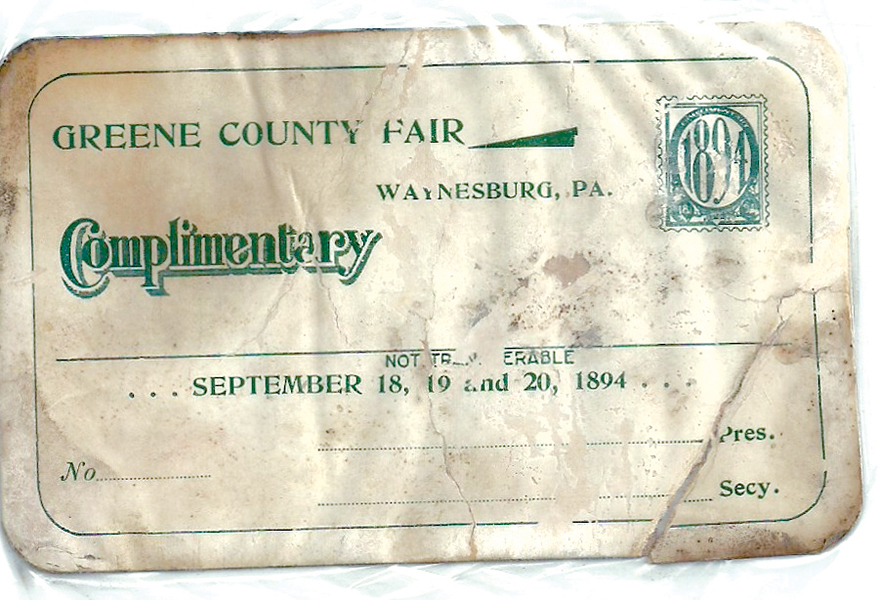


The Greene County Fair has been an important part of the county’s agricultural and social history since the nineteenth century. The first Greene County Fair was held in 1867 by the Waynesburg Central Fair Association. The original fairgrounds were located on land that is now occupied in large part by the Waynesburg University football field. Like most fairs of the time, it featured livestock exhibits, horse racing, home and garden displays, and entertainment attractions that drew large crowds from across the county.
The fair quickly became a major social event. By the 1880s it featured attractions such as hot-air balloon performances by acrobat “Professor Oscar Hunt, the Daring Aeronaut.” However, the fair also developed a reputation for gambling and other questionable amusements.
The midway attractions featured several booths that local newspapers heavily criticized, including the “Shooting-Gallery Man,” “Wheel-of-Fortune Man,” and the Almond Shell game. These games were a major issue that divided the attendees.
In the early 1890s, the original association dissolved after a lawsuit stemming from an injury that occurred at the fair. A woman named Mary Elizabeth Wiley lost an eye in a shooting-gallery accident. She filed a lawsuit and won a significant damage judgement in 1893.
The resulting damages forced the Fair Association to disband, and their properties were sold at a sheriff’s sale in 1893 for $6,200.
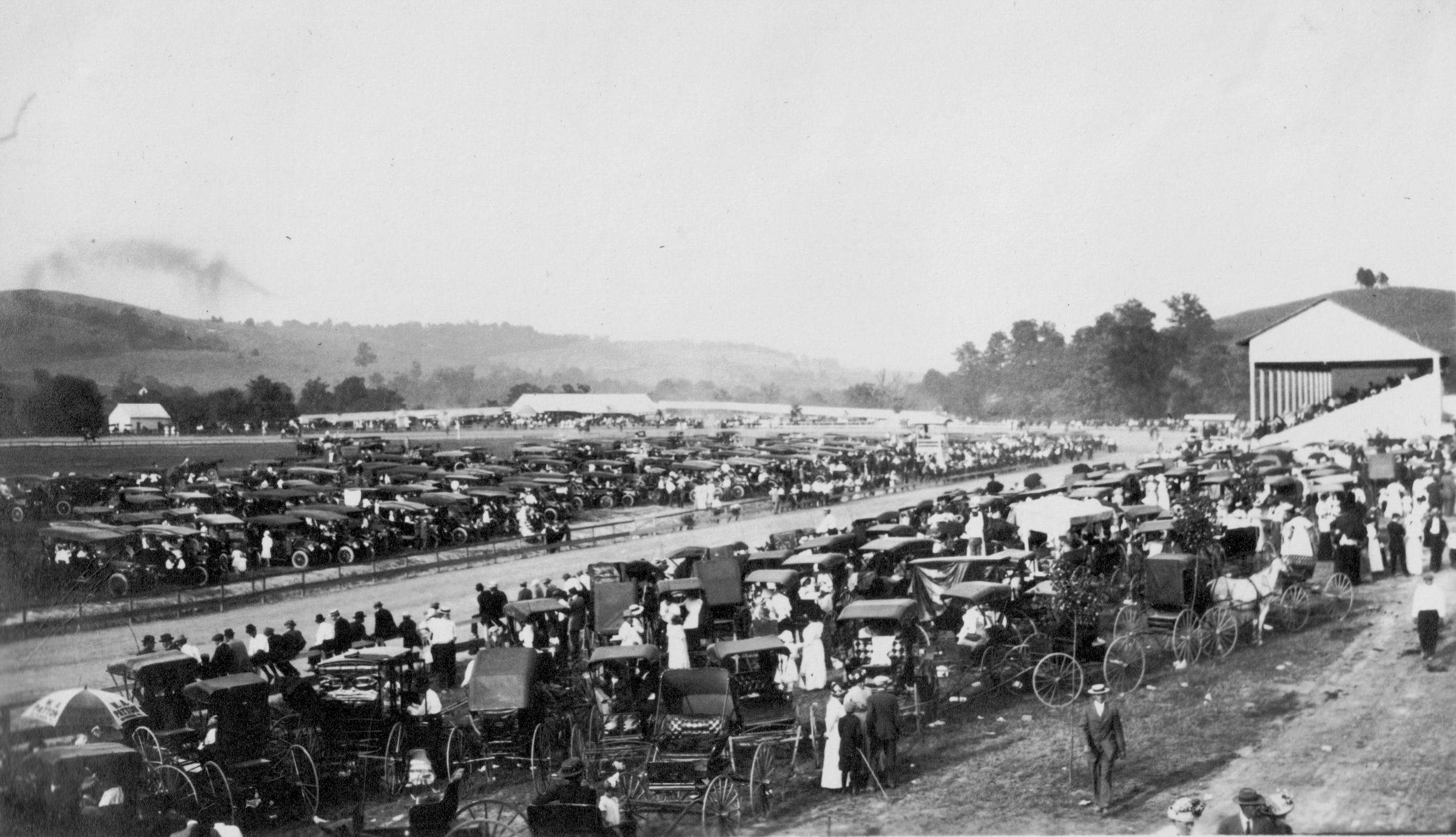
In 1911, the newly organized Waynesburg Fair and Agricultural Association purchased a 60-acre farm from R.S. Sayers for $12,000 at the fairground’s current location. The move allowed the fair to expand its racing facilities, barns, exhibition areas, and entertainment venues. The first fair at the new location was held that same year and marked the beginning of the modern Greene County Fair.
The choice of the site was practical and strategic. Unlike the cramped original grounds near Morgan Street and Ten Mile Creek, the Sayers farm offered open, relatively level acreage large enough for a racetrack, livestock barns, exhibit halls, and a large grandstand.
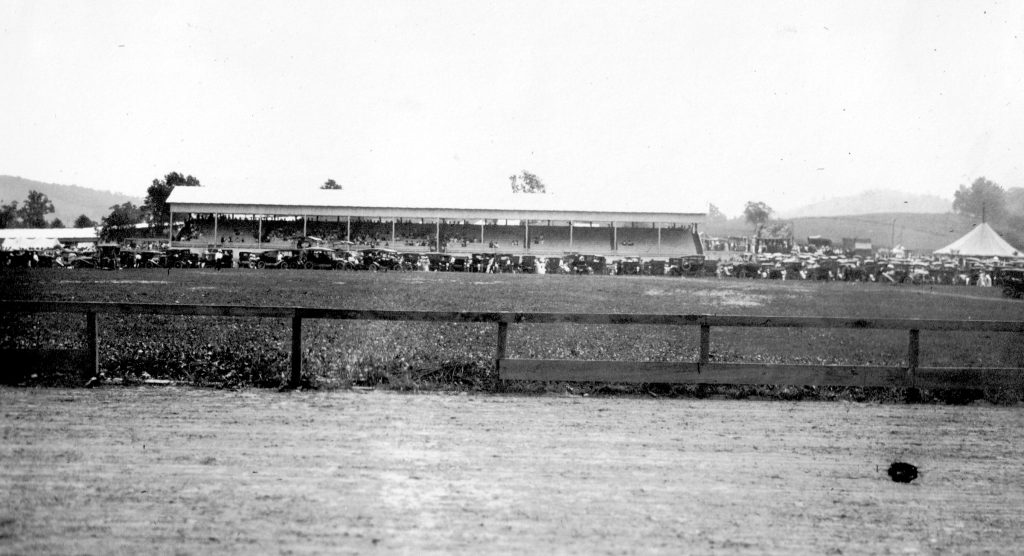
The land also sat outside the borough, giving easier access for horse teams, livestock wagons, and the growing number of automobiles arriving from across the area. The first fair at the present site was held October 3-6, 1911.
By the following year, the association had already constructed a 2,500-seat grandstand and racetrack. The county’s first air show was also held that year featuring aviator Joe “Birdman” Stevenson.
The fair expanded rapidly during the 1910s and 1920s. Entertainment included orchestras, acrobats, and more airplane exhibitions. Automobile racing was added in 1926.
Facing debt after the Great Depression, the fairgrounds were purchased by the Greene County Commissioners in 1940 for $12,500, making it one of only two county-owned fairgrounds in Pennsylvania. After World War II, new barns and facilities were constructed, and the grounds continued to evolve into a year-round community venue.
Additions included: New cattle barns (1946), updated harness racing facilities (1971), an Agriculture Building and indoor arena (1974), a 4-H Barn (1975), and a modern grandstand was completed in the late 1980s.
Over the decades, the fair became one of southwestern Pennsylvania’s premier agricultural events. Harness racing remained a centerpiece, while 4-H and FFA competitions showcased the county’s farming traditions. The first Greene County Fair Queen was crowned in 1986, adding another long-standing tradition.
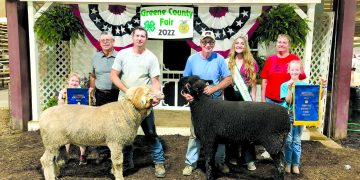
Today, the fair continues to emphasize agriculture through livestock shows, auctions, home and garden exhibits, and youth programs while also offering carnival rides, entertainment, and family activities.