

To celebrate the U.N. General Assembly’s naming of 2026 as “The International Year of the Woman Farmer,” the West Virginia Farm Bureau News magazine is highlighting the contributions of women farmers within the state.
This year, they will honor eight outstanding women, including Direct Results co-founder Shelly Brown, whose biography and accomplishments were featured in their August issue.
In the mid-1970s, William and Eulalia Drennen left California and landed in Wetzel County in search of the rural life they both remembered from childhood. They purchased 500 acres of abandoned hillside farms. Although it was rough ground, it was full of possibility. They took the chance, packed up their children, and started their lives over.
Their daughter Shelly was fourteen and thrilled by the promise of finally having a horse. Today, Shelly and her husband Mark live on a neighboring 96-acre property, working closely with her brother John and his wife Shari, who built an off-grid cabin on the original farm.
Shelly’s early love of agriculture began with her involvement in Vo Ag, FFA, and 4-H. She expanded her knowledge through studies in Agricultural Education and Economics at WVU. Her professional life included broadcasting, publishing and marketing, and ultimately a successful career in Greene County, PA: first at WANB Radio, and later as founder of Direct Results, Inc. in Waynesburg.
However, she remained closely connected to agriculture. She was named an honorary member of Waynesburg FFA Chapter, and is a long-time supporter of both Penn State and WVU Extension Services. “I rely on them for soil testing, pasture recommendations, pest identification and control, food preservation guidance and more, and I encourage everyone to use them,” she explains.
She also works with the Upper Ohio Valley Conservation District and serves as Vice President of the Wetzel County Farm Bureau, where she values learning from neighbors and contributing to local agricultural advocacy.
She attends Thomas Chapel, where she serves as a lay leader and Sunday school teacher. Additional community involvement includes working with the local food pantry We Care Food Pantry, where she volunteers in multiple roles. She also teaches classes in food preservation and soap making, passing on skills she believes should remain part of rural life.
Today, her family manages projects that reflect both tradition and practicality.
Two honeybee hives were started last year and there are plans to expand. Their first harvest of approximately 100 pounds was shared among relatives and friends. The bees also support the health of the farm’s gardens and wild spaces.
In addition, Shelly began harvesting sap and making maple syrup from the two old sugar maples in her yard. She discovered quickly how productive they were. She has since identified more trees in her hollow that can be tapped in future seasons. For now, the syrup is a family treat, especially at Christmas.
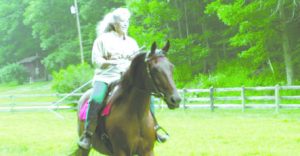
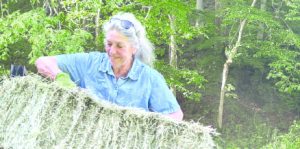
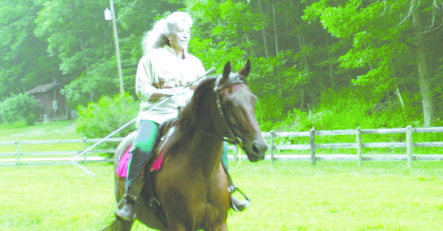
Several acres of hay are harvested each year, though recent seasons have brought both flooding and drought. Her beloved horses also remain part of daily life. The farm was once a small breeding operation; however, now the horses are simply companions and practical transportation for checking fences and pastures.
Finally, two large gardens supply fresh produce to multiple households. Shelly enjoys heirloom varieties and seed saving. The family is considering a high-tunnel structure to extend their growing season and possibly participate in local farmers markets.
The farm’s principles of Preservation, Conservation, Education, and Cooperation are embodied by their ongoing operations.
Erosion control, timber management, clearing tillable areas, and battling invasive species are constant tasks. The family has installed culverts, gabion basket walls, and proper ditching to manage water flow. A professional forester helps guide selective timber harvests to protect future growth.
Water conservation has become increasingly important. The farm has weathered both floods and droughts in recent years. In order to mitigate the effects of those issues, the family has reclaimed old wells, installed on the family farm a solar-powered pump for remote irrigation, developed a year-round spring, and added rainwater collection at the cabin.
Food preservation is another priority. Shelly cans, dehydrates, and stores long-term supplies in a converted sea can that John installed. She also grows most of her own culinary and medicinal herbs.
Shelly Brown’s life and work embodies the essential role women play when it comes to family, land, and the commitment required to keep farms thriving.
Her contributions reflect what countless women farmers do every day: care for the land, preserve knowledge, support their communities, and ensure that rural traditions continue into the next generation.