

There is a certain amount of hypocrisy in complaining that college sports have suddenly become corrupt, commercialized and obsessed with money. Suddenly? College athletics has been playing that game for generations.
As far back as 1902, W&J paid Barney Dreyfuss of the Pittsburgh Pirates $100 to pitch for them against Waynesburg College to ruin the Orange and Black’s Memorial Day double header. This was not an unusual occurrence in that day, since the professionals were not highly paid by their clubs.
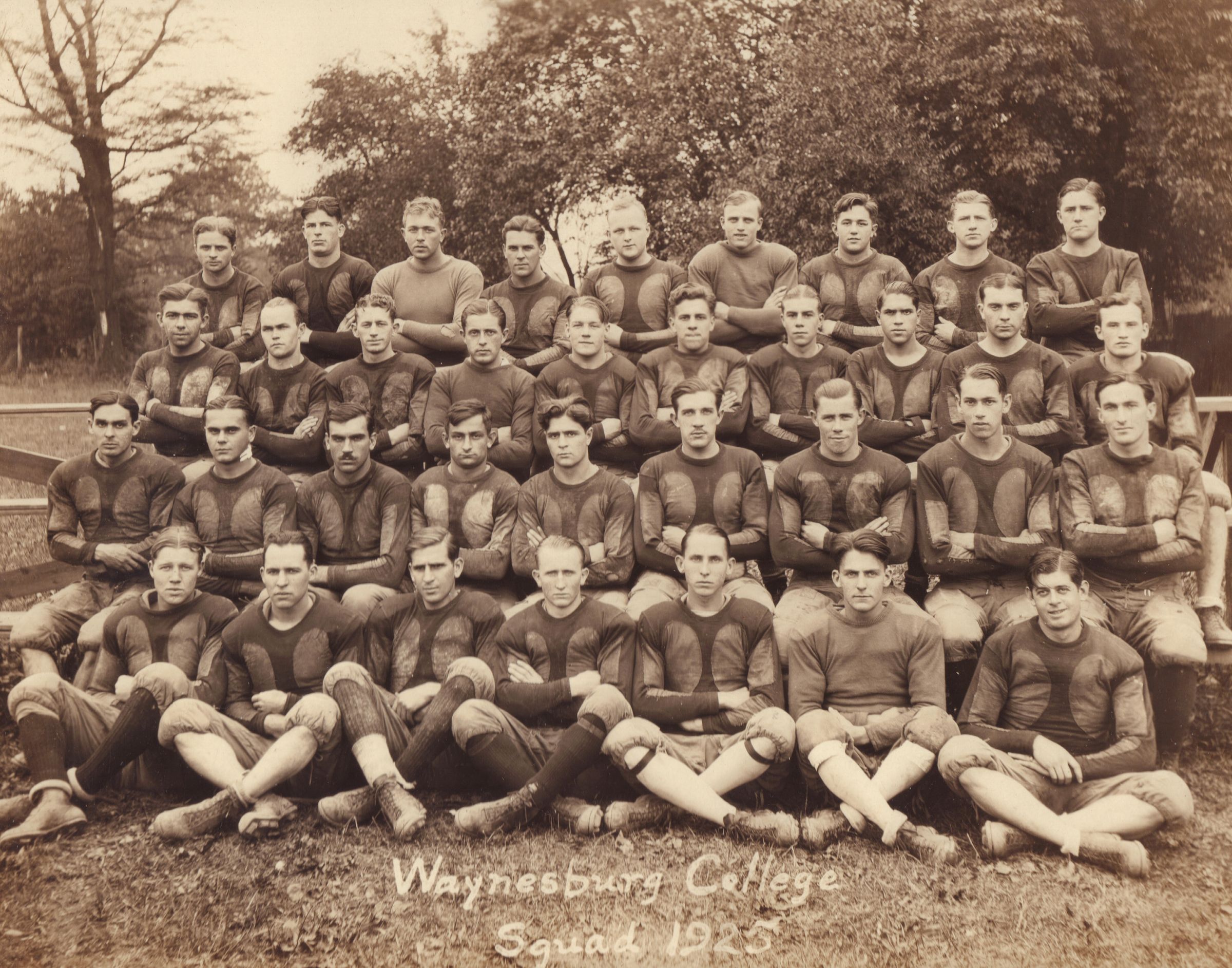
In 1924, Waynesburg College hired former W&J star Britt Patterson to be their coach and lead them into the world of “big-time football.” The town’s boosters provided him with a suitcase full of cash to “recruit” players.
He jumped on a train and attended practices throughout the Midwest, including those at the University of Illinois and the University of Michigan. He stuffed enough cash in some very large hands that he returned with “six huskies that made the other players look like kindergarten pupils,” according to one newspaper account.
Despite a successful season (7-2-1), the College Athletic Association found itself $7,500 in debt at the end of the year. The following season, a new president decided the path to the big-time was financially unsustainable.
There are thousands of stories like this across the country in what is now part of the “charming” lore of college sports. For most of its history, everybody involved in “amateur” college sports agreed to pretend it was.
The universities pretended the athletes were primarily students. The athletes pretended the scholarship was the only compensation they received. Coaches insisted they were educators. Boosters insisted their interest was simply school spirit.
And the NCAA sat in the middle of it all, enforcing an “amateurism” model that became increasingly difficult to defend as college football and basketball turned into billion-dollar enterprises. Meanwhile, everybody knew what was really going on.
There were boosters slipping money to players. There were cars, apartments, and other benefits. There were recruiting inducements and academic “shortcuts”. Programs bent the rules because winning was worth more than compliance. Some were simply better at hiding it than others.
Southern Methodist University became the cautionary tale. The NCAA eventually imposed its infamous “death penalty,” wiping out SMU’s 1987 football season. However, they were not an aberration. It was merely one of the cases in which the curtain was pulled back far enough for everybody to see what was behind it.
Therefore, it is difficult to shed too many tears for the death of “amateurism”.
The athlete who was told he couldn’t make money from his name, image and likeness while the university sold television rights for millions of dollars was participating in a rather peculiar definition of “amateur.” NIL finally exposed that contradiction.
And that part is difficult to criticize. College athletes have every right to benefit from their own names and talents. If a player can make money appearing in commercials or profit from social media, there is nothing inherently wrong with that.
But somewhere along the way, college athletics moved from allowing athletes to earn money to building an enormous marketplace around recruiting, transferring and retaining athletes. That is a very different animal.
The transfer portal turned players into free agents. NIL collectives became recruiting tools. Coaches became recruiters not merely of teenagers but of players already established at other colleges.
The old amateur system was crooked. The new system is becoming something else entirely. And then there is Lane Kiffin. The LSU coach has never been accused of being interested in the conventional boundaries of college football.
His recent attempt to bring former NFL players back to college has pushed that question into territory that would have sounded absurd only a few years ago. His pursuit has triggered legal battles and criticism from coaches who believe it crosses a fundamental line between college and professional athletics.
However, Kiffin’s approach represents the logical conclusion of the argument that has been building for years. If college athletes are professionals in everything but name, why should professional experience disqualify somebody?
If money is already flowing into the system, why shouldn’t schools spend whatever they can afford? If athletes can transfer freely, why shouldn’t coaches recruit them aggressively? If winning produces enormous financial rewards, why shouldn’t everybody pursue every advantage?
That is the Rubicon.
1925 Waynesburg College Football Team; (Image by Babbitt, Roy Huffman Collection, Greene Connections Archives Project)
Once college athletics accepts the premise that the primary objective is assembling the best possible team by whatever legal means are available, the traditional idea of college sports becomes increasingly difficult to recognize. And that should concern even those who believe athletes deserve to be paid.
The answer is not to turn back the clock. That train has left the station. The NCAA’s old model of amateurism was unsustainable because it asked athletes to accept restrictions that the institutions surrounding them routinely violated.
But replacing a dishonest amateur system with an unregulated professional marketplace isn’t necessarily progress. There has to be something in between. College athletics need rules that recognize reality without destroying what makes college sports different from professional sports.
College sports used to have an elaborate set of rules that everybody knew could be broken. Now we have a system in which everybody is increasingly trying to figure out what the rules are.
Perhaps that is what makes this moment so uncomfortable for long-time fans. There is no more pretending that major college athletics is untouched by money and commercial interests.
The question now is whether college sports can survive that honesty. NIL didn’t create the problem. The transfer portal didn’t create the problem. Lane Kiffin didn’t create the problem. They simply exposed how far the sport had already traveled.
If we have indeed crossed the Rubicon. The challenge isn’t figuring out how to get back. It’s figuring out what kind of sport exists on the other side.
Perhaps the hardest part for those of us who grew up watching college sports is that the memories are so powerful. We remember college sports as something that belonged to the campus and the community.
Although I understand memory has a way of sanitizing the past, I remember the innocence of college sports without remembering how often that innocence was an illusion.
That makes today’s reality particularly difficult to accept. Perhaps that is why older fans can be among the most resistant to the transformation. We aren’t necessarily defending what college sports actually were. We are defending what we remember them being. There is a difference.