

For more than a century, the movie-going experience has evolved in remarkable ways. Audiences have traded wooden chairs in nickelodeons for plush recliners, silent films for surround sound, and hand-painted posters for digital marquees. Yet beneath all the technological change, the magic has remained wonderfully familiar.
The Opera House
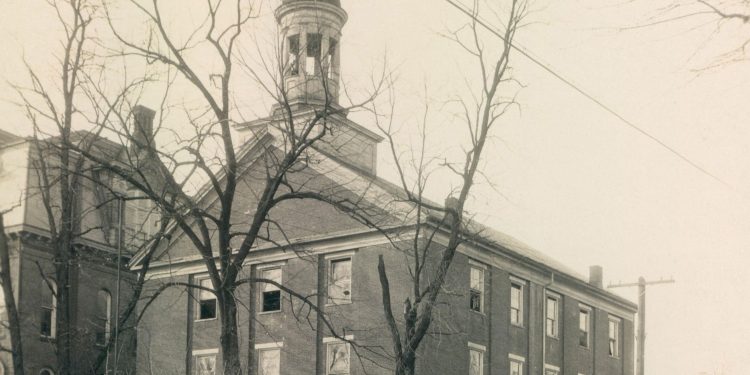
For more than 150 years, the Opera House has stood as one of the architectural and cultural anchors of downtown Waynesburg. The building has evolved from a Victorian town hall into a vaudeville theater, movie palace, and community arts center, reflecting nearly every era of American entertainment.
Construction began in 1870 and was completed in 1871 by the Odd Fellows and Masonic Building Association. The three-story Italianate brick building originally contained: Three retail storefronts on the first floor, a large “Town Hall” auditorium on the second floor, and lodge rooms for the Odd Fellows and Masons on the third floor.
In 1889, the Town Hall was remodeled into a 524-seat Opera House, giving Waynesburg a first-class venue for entertainment during an era when nearly every prosperous town aspired to have such a venue. It hosted plays, concerts, lectures, minstrel shows, comedy acts, political rallies, and community celebrations.
The first public performance was on September 23 of that year. Captain John Wiley welcomed the crowd but said there would be no “munching of peanuts, whistling, or stamping of feet.” On the bill that evening was Adam’s Stock Company’s presentation of Chip, the Fairy Waif.
The following year, the Maude Sypher Dramatic Company was formed and performed to sold out audiences. Miss Sypher had returned home to Waynesburg after working in New York City with a famous acting company.
One of the more famous visitors was Mrs. General Tom Thumb, who appeared with her second husband Count Magri. On her arrival at the train station, she and the “Count” were driven to the Downey House in a tiny, closed carriage pulled by two ponies, “no larger than Newfoundland dogs.”
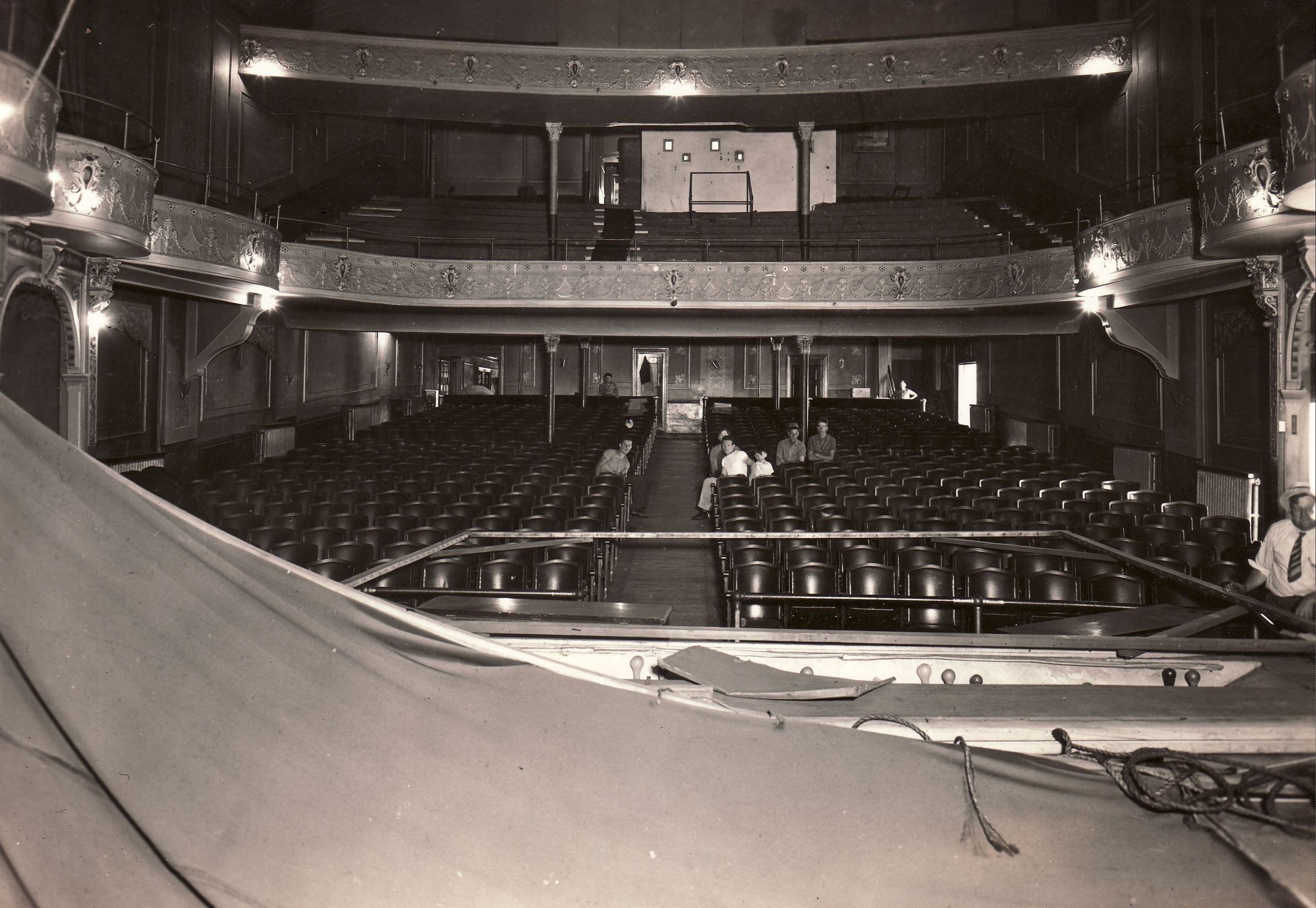
As live entertainment flourished, the Opera House underwent a dramatic expansion around 1900. A large rear addition replaced the old livery stable, and renowned theater architects from New York designed a much larger auditorium. The renovation increased seating to approximately 1,100 patrons, complete with: Main floor seating, Two balconies, Decorative side boxes, and an enlarged stage capable of accommodating touring productions.
The first show was staged in January of 1901. Howard Kyle, one of the most famous actors in the country at the time, starred in the play Nathan Hale. For a town the size of Waynesburg, it was an impressive cultural landmark in one of the finest theaters in southwestern Pennsylvania.
Seasons began in September and ran through May. Manager J.W. Munnell brought in national touring companies. The acts included theatrical groups, minstrel shows, Shakespearean troupes, vaudeville acts, the Pittsburgh Orchestra, and popular local artists.
They even showed some moving pictures occasionally. In addition, it was the site for the annual Greene County Teachers Institute – a forum that brought famous lecturers such as William Jenning Bryan to town.
In addition to Bryan, other notable appearances through the years included: President William Taft; Woodrow Wilson’s VP, Thomas Marshall; Calvin Coolidge’s wife Grace; heavyweight champion Bob Fitzsimmons; Comedians Will Rogers and Amos & Andy; and the famous actress Sidney Drew (who was a member of the Barrymore family).
A popular recurring visitor was Lyman Howell’s Travel Festival, a moving picture show that showed exotic travel destinations and news reels of major events. Each show also featured an animated cartoon which could always be counted on “to convulse the most sedate audience.”
In January of 1911, the venue hosted a popular touring burlesque show called “The Monte Carlo Girls.” Apparently, many of the town folk were up in arms. The Waynesburg Republican reported, “It was a disgrace to decent society” and “It went beyond the limits of both the law and decency.”
In 1912, a second projector was purchased so people did not have to wait for the operator to change reels. In 1915, they began using direct current, hoping to prevent the flickering caused by alternating current. It was the first use of DC in town because the town’s grid was AC.
During that time, the Opera House also hosted multiple benefits for groups, civic projects, and charities. One of the most unusual events was a locally produced motion picture in 1915. The film was written and produced by the students and faculty of Waynesburg College. The title was “Metamorphosis of a Freshman,” and the story featured over 400 students and townspeople chronicling the life of a fictional student.
One musical in 1916 called The Million Dollar Doll even featured an elevated runway over the heads of the audience.
Like theaters across America, the Opera House adapted to changing tastes.
By 1914, motion pictures had become a regular attraction, alongside live performances. In 1918, Charles Silveus of the rival Eclipse Theater bought the Opera House and ran both venues.
In 1929, Silveus sold both theaters to Paul Puglia and his brother-in-law Frank Pishionery. The building underwent another major transformation into a modern Art Deco movie theater in 1939. Changes included: A fireproof auditorium, an elegant Italian marble lobby, a new central entrance, a neon marquee, removal of the upper balcony, and new seating for roughly 820 patrons.
After 57 years, under the management of the Puglia family, the theater closed in 1986. Upon his retirement, Paul Puglia, Jr. recalled the grand reopening night in ’39. The first movie was Gone with the Wind. It was a gala affair with strobe lights in front of the theater and seats required hard-to-get reservations.
For generations of Greene County residents, going “to the Opera House” meant going to the movies on Saturday night.
Revival as the Waynesburg Theatre & Arts Center
In 1989, the Kiger family purchased the building and carefully restored it. It reopened as the Waynesburg Theatre & Arts Center, showing first-run films while also hosting live productions, concerts, and community events.
The Opera House in the early twentieth century with two separate balconies.
Photo credit: Greene Connections
One of its reopening highlights was a production of Godspell by the Greene Theatre Company. Visitors could still admire original decorative canvas paintings flanking the stage—survivors from the theater’s earlier years.
Like many independently owned single-screen theaters, the Opera House struggled against multiplexes and the expense of converting to digital projection. The theater ultimately closed in 2011, ending nearly 140 years of entertainment history.
Although movies no longer flicker across its screen, the Opera House remains one of Waynesburg’s most recognizable historic buildings. It reflects the optimism and prosperity that shaped Waynesburg in the late nineteenth century. Few buildings have witnessed as much of the area’s social and cultural history, making it one of our most treasured landmarks.
Nickelodeons in Waynesburg
Long before movie palaces dazzled audiences with glittering marquees and plush velvet seats, America’s first taste of the silver screen came in humble storefront theaters known as nickelodeons.
For five cents, people from every walk of life could step inside to escape into a world of comedy, adventure, romance, and newsreels. Between 1905 and the early 1910s, these simple theaters transformed entertainment from an occasional luxury into an everyday pastime. In communities like Waynesburg, their arrival marked the beginning of a cultural revolution that forever changed how people experienced storytelling.
Between roughly 1910 and 1935, Waynesburg supported an impressive number of entertainment venues for a town of its size.
Waynesburg’s first dedicated movie house was the Eclipse Moving Picture Theatre, which opened in 1912 just across Fruit Alley from the Opera House. According to a 1914 Waynesburg Republican story, “The local pictures shown last night attracted a large crowd, and the theater was crowded until a late hour.”
Unlike the Opera House, which was built for live stage productions, the Eclipse was designed exclusively to show silent motion pictures. Inside, patrons sat on simple wooden chairs while a pianist usually accompanied the silent films. However, Silveus employed the Waynesburg Jazz Band (consisting of pianist, violinist, saxophonist, and drummer) for the job.
Programs usually consisted of several short films, newsreels, comedies, westerns, and serialized adventures that changed every few days. In other words, the Eclipse was Greene County’s window to a rapidly changing world.
The theater quickly outgrew its original quarters. In 1915, the building was expanded to occupy the entire first floor. Then, in 1921, a substantial addition costing $25,000 stretched to Strawberry Alley, increasing capacity to 650 seats.
According to G. Wayne Smith’s History of Greene County, the management of the Eclipse often donated ticket sales for benefits. In 1914, those recipients included the Red Cross, the high school basketball team, the college athletic association, and the Sunday School class of the First Baptist Church.
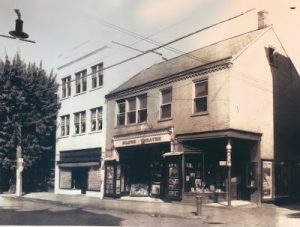
The former Eclipse Theatre looks like an average office building of the 1930s. But, behind its façade lies a fascinating history. From 1912-1954, it was one of two movie theatres in downtown Waynesburg, located side-by-side across Fruit Alley.
After Charlie Silveus sold the theater to Larry Puglia and Frank Pishionery, they updated equipment in both theaters, changed the Eclipse façade, renamed it The Wayne, and continued to show movies there until 1954.
According to Mary Beth Pastorius, “Charlie Silveus is considered a pioneer of cinema history. He was both a theatre operator and filmmaker. With a hand-cranked, 35-mm camera, he captured both important events and every-day life in Waynesburg from 1914 until 1929, showing his films alongside commercial releases at The Eclipse. Miraculously, about an hour and a half of his footage survived and is now owned by the Waynesburg Fire Department.”
(The footage was preserved and narrated by the late Miles Davin, Sr.)
The Edisonia Theatre and the Lyric Theatre are two lesser-known chapters in Waynesburg’s movie-going history. Both operated during the early decades of the twentieth century, but details about their operations were difficult to ascertain.
The Edisonia Theatre was established during the 1910s, when theaters often borrowed the name “Edisonia” in tribute to Thomas Edison, who was instrumental in developing early motion picture technology. Like many neighborhood theaters of the period, the Edisonia specialized in silent films and newsreels accompanied by live piano music.
It was located in downtown Waynesburg in the Syphers Building on West High Street. A Pittsburgh magician named J.B. McIntosh bought the theater in 1912.
The old Lyric Theatre Room appeared in Waynesburg during the 1920s, as movie houses became larger and more elaborate. By this time, theaters were moving beyond the simple “nickelodeon” concept, offering upholstered seating, decorative interiors, improved projection equipment, and expanded concession stands.
Like many independent theaters, the Lyric faced stiff competition from larger, more modern venues. Eventually, patrons gravitated toward the expanded Opera House and the Eclipse, and it faded from Waynesburg’s entertainment scene. It was located in the Blair and Cole Building on South Washington Street.
There were also small theaters such as the Majestic Theater in the Downey House, but few details were available.
Carmichaels’ Lund Theatre
The Lund Theatre stood at 100 North Market Street in downtown Carmichaels and was the community’s principal indoor movie theater for several decades.
The theater most people remember actually replaced an earlier Lund Theatre. In 1949, owner John Lund and his son “Fuzzy” Lund, constructed a brand-new, modern theater immediately beside the original building. The new theater officially opened on August 5, with Randolph Scott starring in the western Canadian Pacific.
The new Lund featured: Seating for approximately 900 patrons. A large stage measuring 28 X 30 feet, allowing occasional live performances. Modern projection and sound equipment. Comfortable seating and air-conditioning that made it a popular gathering place during the 1950s and 1960s.
Like many small-town theaters, the Lund was more than a place to watch movies. Saturday matinees drew children, while Friday and Saturday evenings became social occasions for teenagers on dates and families enjoying a night out.
Unfortunately, changing entertainment habits and the rise of television reduced attendance. In 1971, the First National Bank of Carmichaels purchased the property. The theater was demolished shortly afterward, and the site became a parking lot.
Evidence from The American Motion Picture Directory (1914–1915) indicates that Carmichaels also had a Ross Theatre during the nickelodeon era. Although little documentation survives, its listing shows that motion pictures had reached the borough by the mid-1910s, years before the Lund Theatre became the town’s premier cinema.
Greensboro’s Star Theatre
The best-documented theater in Greensboro was the Star Theatre, which appears in The American Motion Picture Directory (1914–1915). The listing confirms that Greensboro had an operating movie house by the mid-1910s, just as motion pictures were becoming America’s favorite form of entertainment.
At that time, Greensboro was a bustling river and coal town. Although, the theater probably occupied a remodeled storefront rather than a purpose-built movie palace.
Rices Landing Theatre
The National Register nomination for the Rice’s Landing Historic District notes that by the early twentieth century, the borough had developed into a thriving commercial center that included a clothing store, restaurant, pool hall, post office, bank—and a movie theater.
Unfortunately, the nomination does not identify the theater by name, and no surviving advertisements have surfaced to confirm its name.
Whether in Greene County’s earliest nickelodeons or a grand downtown theater, each generation has discovered that while the screen changes, the experience of escaping into a great story never does.