

This month, I searched my Backroads magazine for a story that would be seasonal, yet timeless. I was lucky enough to come upon another article by a then 16-year-old Erin Stockdale (Patterson).
She shared the story of her family’s experiences in making apple cider. In the late 1930s, her grandfather Oliver Stockdale was a young boy who lived on a farm west of Waynesburg. The tall, thin young man with blonde hair and blue eyes would arise each morning and walk the two and a half miles to school.
Upon his return home, he would have to do his chores. It was tough work, but in the autumn, he would get to help his father Hillard make apple cider. He enjoyed the process, but he especially enjoyed the end product.
The Stockdale family had a 25-acre apple orchard divided into sections according to their intended usage. Many were used for traditional snacks and various baked goods. Others were used for making vinegar, apple butter, apple cider, and even apple jack.
Although the wood could have been used for fuel, many farmers considered it bad luck to cut down an apple tree.
The family felt that late season apples made the best cider. They also shared an enhancement technique. They would “place the cider in 55-gallon barrels with newspapers on the bottom. This would make a ‘mothery’, which made the vinegar ferment faster.”
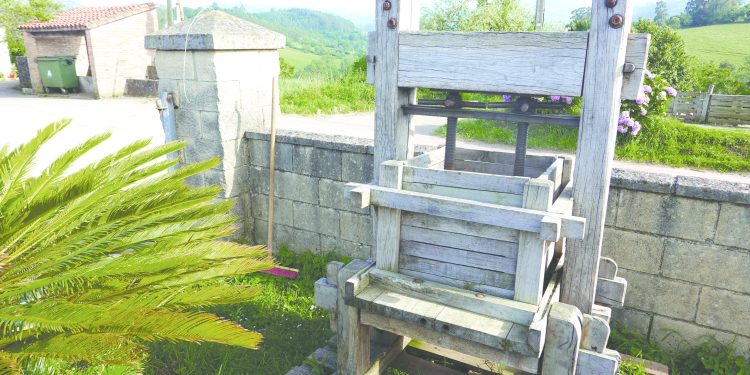
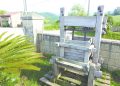
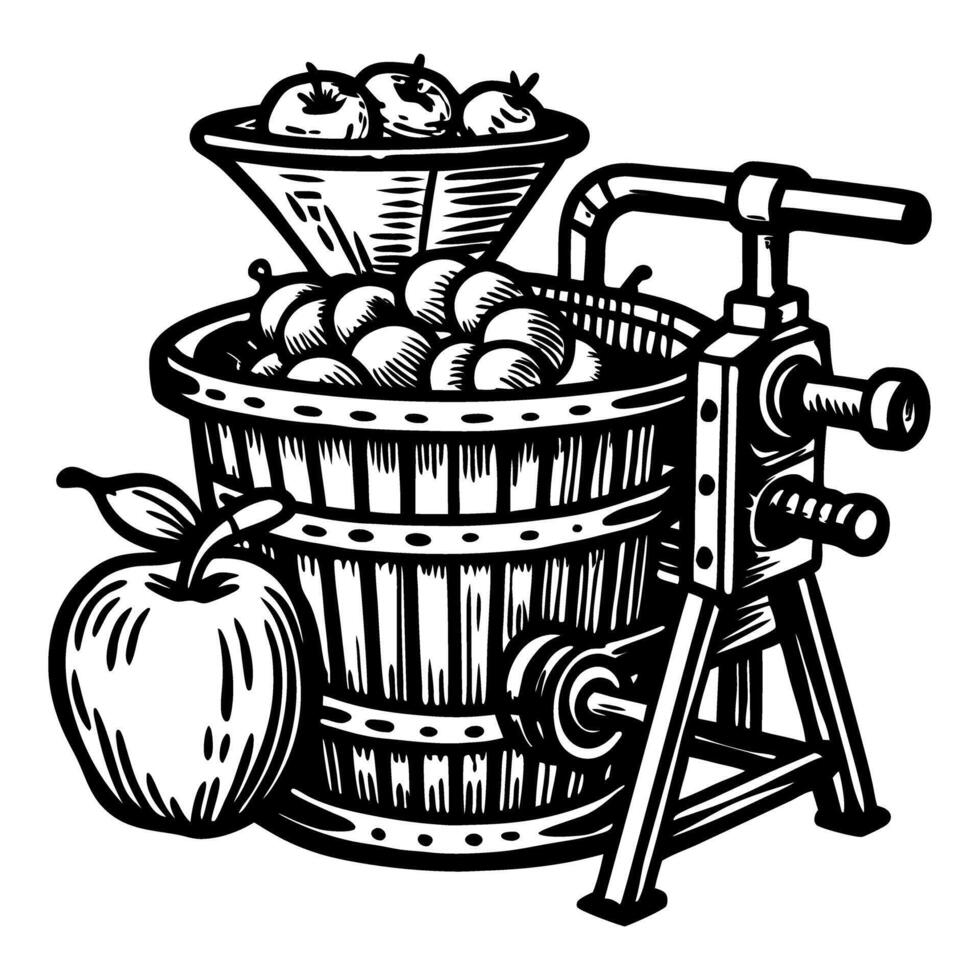
Their early century apple press had been modernized by adding an electric hand crank. The update had been necessary to keep up with the local demand for both vinegar and cider.
However, by the 1950s, local grocery stores began to carry cheaper commercially produced vinegar. Eventually, the family discontinued the large-scale production and just produced enough for friends and families.
As a result of this article, her teacher, Mrs. Albert, arranged to take her and three classmates on an after-school field trip to watch the cider-making process in person. Erin then co-authored another article with classmates Kevin Holleran, Randy Beazell, and Nancy King.
The excursion was to a farm “out beyond Oak Forest.” Earl Cole had an ante-bellum apple press that was still very functional. The demonstration was presented by Earl’s son and daughter-in-law.
Terry and Jane Cole were two “very energetic and friendly young teachers in their early thirties.” One of their hobbies was making apple cider and apple butter to be sold at the Greene County Historical Society’s fall festival.
In the second article, Terry explained his preference for late season “Jonathan’s and Winesaps” for making cider. He then demonstrated the collection process for the students by ascending a ladder and vigorously shaking the tree.
The students helped in the collection, cleaning and sorting of the apples. The article details the compression and straining processes before explaining the remnants of the apple were used for fertilizer or given to the pigs.
Before the students left, Jane asked the students if they would like to taste the fruits of their labor. “She went into the house for paper cups, dipped deeply into the milk can and served us each a cool, sweet, tall glass of freshly pressed cider. Well, at this point it was just apple juice. Nevertheless, we chugged that cool sweet nectar down.”
Field trips have always offered students something a textbook cannot: the chance to experience the world firsthand. Visiting museums, farms, and historic sites helped children connect classroom lessons to real life.
Teachers like Mrs. Alberts understood the value of those experiences and often went to great lengths to provide them. They knew that curiosity grew through seeing, doing and asking questions—and that some of the most lasting lessons occur beyond the walls of a classroom.