

All photos courtesy of Seth Wilson.
This month’s Backroads story was written by Jeff Howard in his junior year of high school. He told the story of his great-great grandfather George L. Howard.
Toward the end of first decade of the 20th century, George and his family moved his buggy and wagon business from Masontown to Waynesburg. The business was located on Greene Street. At the time of the article (1976), it was the location of the Greene Street Garage. For those too young to remember that, it is the current location of Blue Prints.
Howard sold and repaired buggies and wagons. Harnesses were also part of the business. During this time, only the wealthiest Americans owned automobiles. Therefore, he provided a valuable service for the community.
Records from 1914, showed they repaired buggies for Equitable Gas Company, Huffman Furniture, prominent individuals, and the town’s undertakers. The buggies ranged in price from $70-$100 (approximately $3,600 today).

However, the average farmer’s annual income at the time was $600; therefore, only the wealthiest individuals in town could afford these luxury buggies. The wagons were meticulously hand-crafted and painted on sight.
In addition, when leather upholstered buggies became popular, all of that work was added to the production and repair facilities.
As usual, it’s the stories of the people associated with those businesses that make the history rich and unique. An employee named Binki Townsend got drunk after (or during) work one day and passed out under the wagon he was stripping. He had covered himself with hay for warmth but failed to cover his legs.
The temperature dropped well below freezing that night, and Binki was found the next morning suffering from severe frostbite. Unfortunately, both of his legs had to be amputated. Things were different in those days, so they made a special stool for Binki so he could continue to stripping the wagons for years to come.
By 1934, Henry Ford’s assembly line had made it possible for most families to purchase a car, and the buggy business faded into history. George’s son Edward had kept the business running for nearly two decades, but he understood the time had come to pivot.
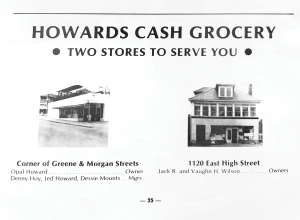
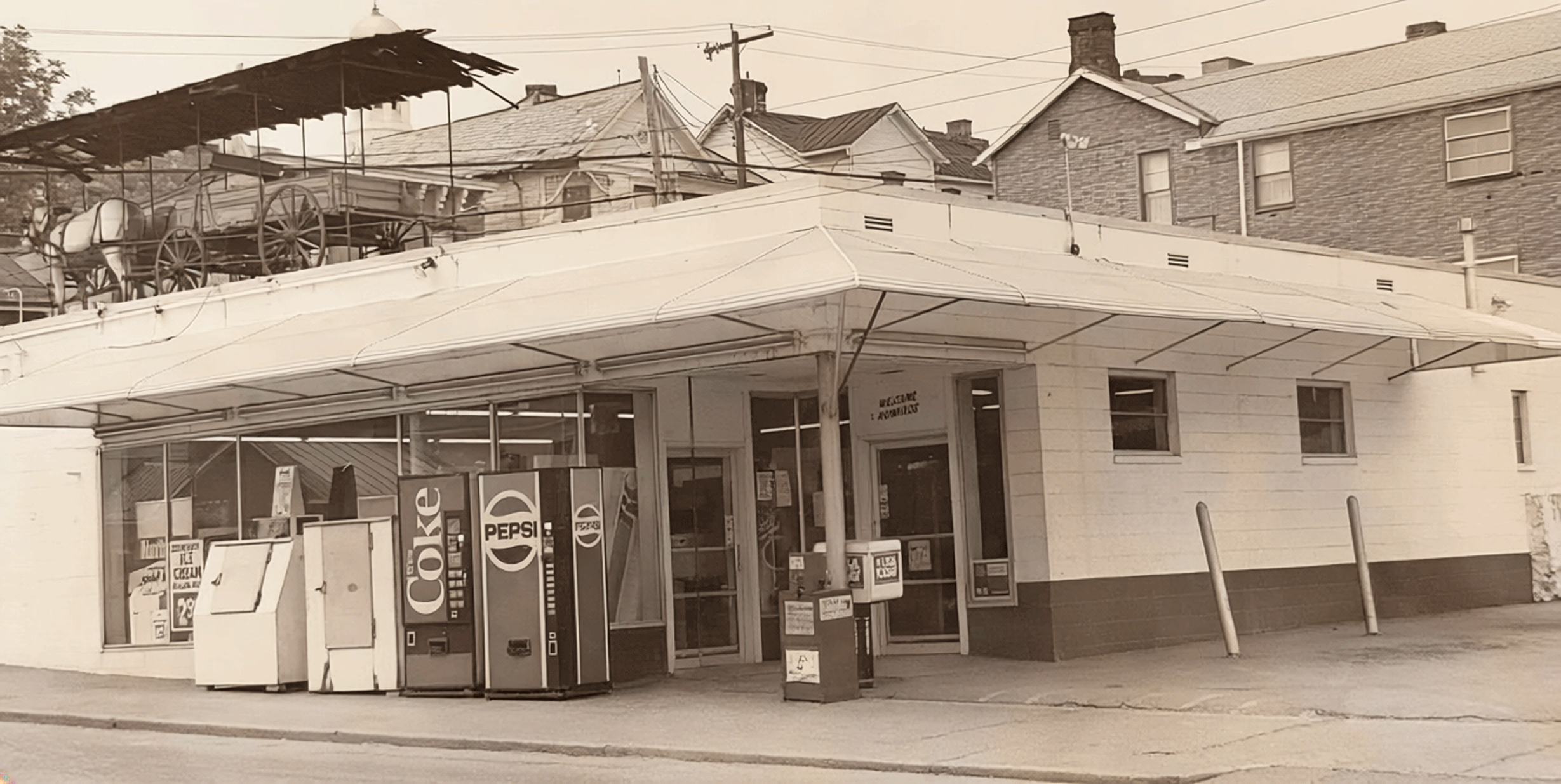
Edward borrowed $100 from a finance company and started a grocery store on the corner of Morgan andGreene Streets. The store ended its first week with a profit of $18 and continued to grow steadily for four decades until the next seismic shift in local commerce.

The original store gave way to a larger one that was built in 1954. Ed ran it until his death in 1968 and was succeeded by his wife Opal.
Editor’s note: Those of you who are north of 60 will remember “Big” and “Little” Howard’s stores. Little Howard’s was a Greene County bodega before we ever heard that term. It was located on High Street just after the underpass on the left.
At “Big Howards” (across from the Waynesburg Fire Department) a large wagon mysteriously sat atop the store for years. The origins of that homage were part of the Crossroads article. Apparently, a man named Joseph Morris had bought one of Howard’s early wagons years before. He kept it stored in his barn “at a farm next to Rohanna’s Restaurant.”
Morris’ son Donald sold the wagon at auction, and the Howard family purchased and restored it to be placed on the roof as a celebration of legacy. After adding “two life-like dapple gray, draft horses” to the display, it became an attraction and curiosity for locals and visitors alike.
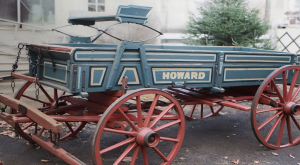
The wagon from bygone days.