

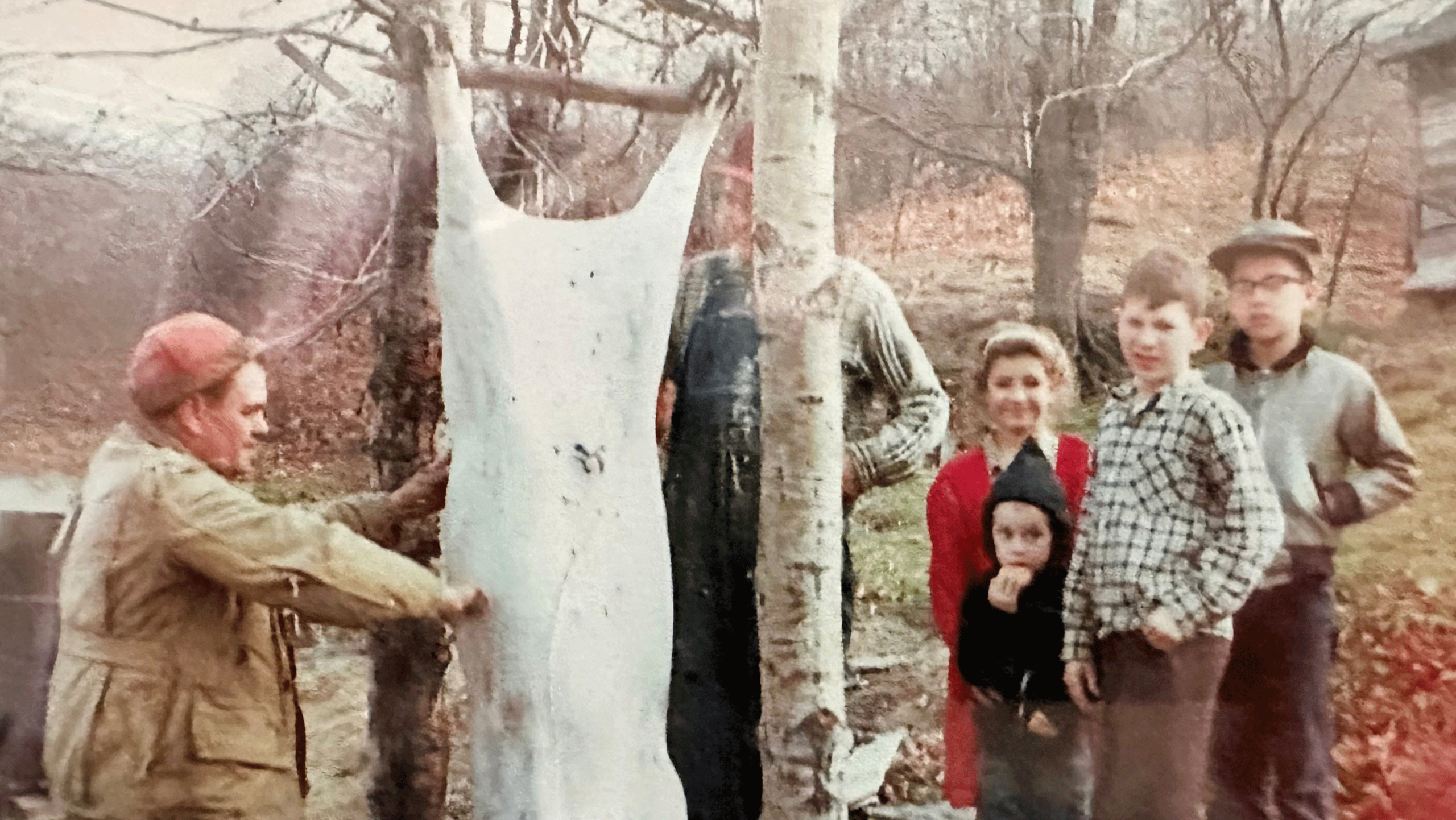
Members of the Mayle/Mahle clan: Merle, Don, Cindy, TR (blue hoodie), Woody, and Ross prepare for their Thanksgiving morning tradition.
As a child growing up, Thanksgiving morning always carried a particular kind of excitement in our family. Long before the turkey went into the oven or the pies appeared on the kitchen counter, the day began in the cold, gray light of early morning with the butchering of hogs. To someone unfamiliar with the tradition, it might sound like a harsh way to begin a holiday. To us, it was simply part of Thanksgiving, a ritual woven into the fabric of family life.
I remember arriving at my Uncle Don Mayle’s farm shortly after sunrise where people were already moving around outside. The air was usually sharp and cold, and frost covered the grass. There was a fire burning and its smoke was drifting through the crisp morning air. Many of my relatives gathered for the event, each person knowing what needed to be done. The older men seemed to move with practiced confidence, while the children watched, helped where they could, and tried to stay out of the way.
As children these tasks seemed larger than life, and we were rewarded in ways that seem rather unusual in today’s world. At the ripe old age of nine, my cousin Gary Mayle (who always shot the hogs) handed me the gun and said, “today, you shoot your first hog.” My father was hesitant at first but after some convincing he agreed to let me try. Gary explained “when I clap my hands and he looks at me squeeze the trigger.” With the clap of his hands the gun fired, and the hog lay lifeless on the barn floor…I remember feeling a mixture of pride, nervousness, and respect.
Another unusual tradition that we as kids looked forward to was getting a chance to shoot at the pig’s “pee bag.” After the innards were removed from the hog the pee bag, which was usually full, was removed and placed on a nearby fence post. The kids would all draw straws to see who got the first shot at it. Watching as it exploded would bring squeals from everyone who witnessed the event. We usually harvested on average 5-7 hogs, so everyone usually got a chance to shoot.

What stands out most in my memory is not the work itself but the people. Thanksgiving morning brought everyone together. Conversations started before breakfast and continued throughout the morning. There was teasing, storytelling, laughter, and an occasional argument, followed by laughter again. Someone was always making coffee, and there seemed to be an endless supply of biscuits, sausage, and other food to keep everyone going.
Butchering the hogs was hard work. It required cooperation, patience, and knowledge passed down from one generation to the next. Nothing was wasted. Uncle Don always raised a couple of extra hogs to distribute to anyone who was willing to help in the process. The meat would be carefully divided and prepared for the long months ahead. Sausage was made, bacon was cured, and other cuts were preserved. What might seem like an ordinary chore today represented security and self-sufficiency to the families who practiced it.
As a child, I did not understand all of that. I only knew that Thanksgiving morning meant being surrounded by people I loved and being part of something larger than myself. The work gave the day a sense of purpose before the celebration began. By the time the afternoon meal arrived, everyone had earned their place at the table.
Looking back now, those mornings feel almost like another world. Modern life has changed the way many families obtain and prepare their food, and traditions such as ours have become less common. The tools, the routines, and many of the people have passed on. Yet the memories remain remarkably vivid, the cold morning air, the smell of wood smoke, the sound of familiar voices, and the feeling of standing alongside family members as everyone worked together.
I do not remember those Thanksgiving mornings simply because hogs were butchered. I remember them because they represented family, tradition, hard work, and togetherness. The work connected us to earlier generations and reminded us that a holiday was not only about the meal at the end of the day. It was also about the people who gathered to make that meal possible.
That is why, even after so many years, the memory of Thanksgiving morning still feels warm. The details have faded with time, but the sense of belonging has not. For me, those cold mornings remain one of the most enduring memories of Thanksgiving.