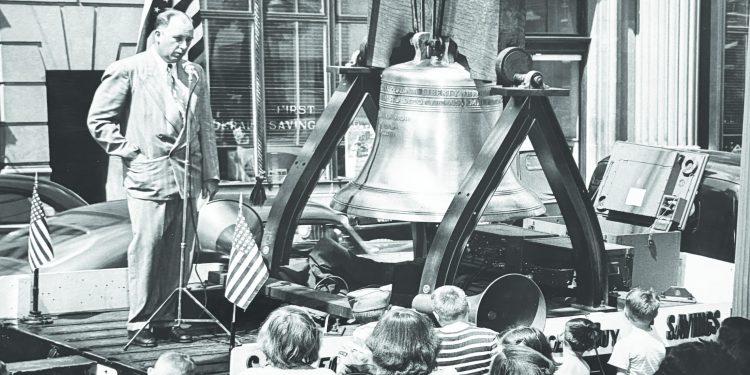


In 1950, Waynesburg knew how to throw a celebration.
The county’s Pennsylvania Week brought together the local business community for an elaborate week-long celebration of commerce. The event recognized the commercial enterprises that kept Greene County working, earning money and looking toward the future.
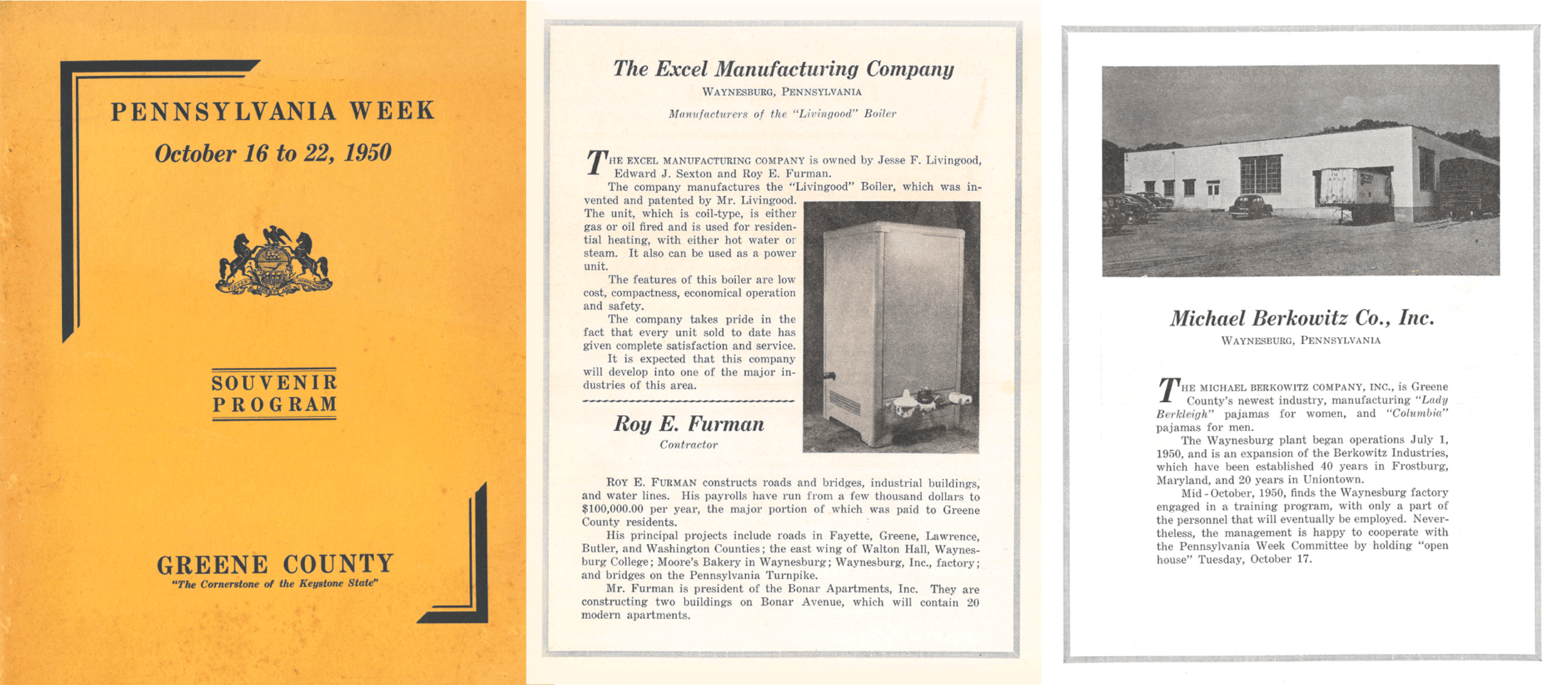
Local historian, Albie Rinehart shared with us an old pamphlet from that celebration which offers a glimpse of a community whose economic landscape has changed considerably in the three-quarters of a century since.
The week’s schedule included nightly banquets at the Fort Jackson Hotel hosted by the Waynesburg Rotary Club, Waynesburg Lions Club, Carmichaels Grange, Waynesburg University, and the Waynesburg Junior Chamber of Commerce. On Saturday, there was a morning parade followed by the Waynesburg College vs. Niagara College football game. That Sunday, all the churches in the county observed Pennsylvania Week.
Among the local businesses represented in the pamphlet’s advertising were Michael Berkowitz Co. Inc., a manufacturer of pajamas; Excel Manufacturing Co., which produced Livingood Boilers; Greenway Manufacturing (clothing); Duquesne Light; and Robena Coal Mine. Their names tell a story about an economy that was more varied than the familiar image of Greene County as a place defined exclusively by coal and farming.
Some made things people wore. Others manufactured industrial equipment or supplied the energy that powered homes, businesses and factories. Still others extracted the coal that fueled the region’s industrial ambitions. Together, they represented the interconnected pieces of an economy in which manufacturing, mining and utilities provided jobs and helped sustain local communities.
In those days, a person might work in a garment factory, a machine shop or a coal mine, collect a paycheck, shop at local businesses and raise a family within a relatively small geographic area. The products made here could travel hundreds of miles, but the wages earned producing them circulated close to home.

America in 1950 was enjoying the optimism of the postwar era. Industrial production was central to the nation’s prosperity, and manufacturing jobs offered many workers a path into the expanding middle class. Greene County participated in that larger economic story, even if its experience was shaped by its rural character and abundant natural resources.
The decades that followed brought enormous changes.

Companies consolidated operations, production methods evolved, and businesses faced mounting pressure to lower costs. The garment industry, in particular, would be transformed as producers confronted cheaper overseas production. Other manufacturers faced changing markets and the economics of operating at a larger scale.
Greenway Manufacturing offers a particularly interesting local example. Established in 1947, the children’s clothing manufacturer grew from a small operation into a substantial employer. By 1982, it employed approximately 400 people across facilities in the Waynesburg Industrial Park, Nemacolin and Morrisville. Its success reflected a deliberate local effort to attract manufacturing and create jobs beyond the traditional industries.
Today, the disappearance of manufacturing is part of a national story. Communities across the industrial Northeast watched factories close, production move elsewhere and once-familiar occupations become increasingly uncommon. The transformation was not simply about buildings falling silent. It changed the character of employment, the expectations of working families and the economic prospects of entire communities.
Although Greene County’s industrial story did not end with the passing of these businesses, the mix of enterprises represented in that 1950 pamphlet reminds us that the county once supported a broader collection of manufacturing operations.
Perhaps that’s what makes the Pennsylvania Week program so interesting. It preserves a moment when the people behind those enterprises gathered to celebrate what they had built. They could not have known how much the economic landscape would change. They had businesses to run and a community whose future seemed full of possibility.
The banquets ended. The years passed. Some businesses disappeared, and others became memories carried by former employees and their families. But the pamphlet remains, a small paper window into a time when Greene County was more economically diverse than just a farm or a coal portal.