

Halloween didn’t arrive in America as a ready-made children’s holiday. It started as an Old-World immigrant tradition, became a night of superstition and mischief, evolved into an excuse for parties and games, and only gradually became the candy-and-costume holiday sitting on our doorstep today.
During much of 19th-century America, Halloween was a relatively minor observance, but its popularity grew substantially during the second half of the century.
The influx of Irish and Scottish immigrants after the 1840’s played an important role in popularizing the night. They brought traditions including costumes, games, bonfires and Halloween pranks. In some communities, the event was an expression of ethnic heritage.
Scottish-Americans held parties featuring Robert Burns’ poetry, and Scottish music, dancing and games. Irish-American communities preserved their own customs, including fortune-telling and door-to-door activities. Over time, however, these traditions escaped their ethnic boundaries and were adopted by other Americans.
Interestingly, Halloween was initially as much a young people’s night of mischief as a children’s holiday. Newspapers from the late 19th century describe teenagers and young adults moving signs, overturning objects, soaping windows and engaging in other pranks. Some of these activities eventually became serious enough that communities looked for ways to channel Halloween mischief into organized celebrations.
By the early 20th century, Halloween had become increasingly mainstream. Women’s magazines and newspapers began publishing suggestions for Halloween parties, decorations, games and food. Halloween was becoming something that middle-class families could deliberately stage and organize, rather than simply observe as an inherited folk tradition.
However, the celebrations still weren’t centered on candy. Parties were the major component. Children did go door-to-door asking for fruit, nuts or other treats, but modern “trick-or-treating” wasn’t yet the dominant custom. The phrase itself wasn’t established until the mid-20th century.
When there were treats, they were generally homemade. Children received apples, nuts, popcorn, homemade candy, cookies or pieces of cake. Apples were especially appropriate because the autumn harvest was central to the season.
Molasses and sugar were common ingredients in homemade sweets. Taffy, popcorn balls, fudge-like candies and simple sugar candies could all make appearances. Cookies might be cut into basic shapes or decorated with icing, although nobody was expected to create a pumpkin cookie with precisely piped lines and a facial expression.
The food served at these gatherings reflected the season. Doughnuts, cider, apples, nuts, cakes, cookies and other baked goods were common choices. Pumpkin could make an appearance, too, although the pumpkin’s association with Halloween was initially more closely connected to lanterns than desserts.
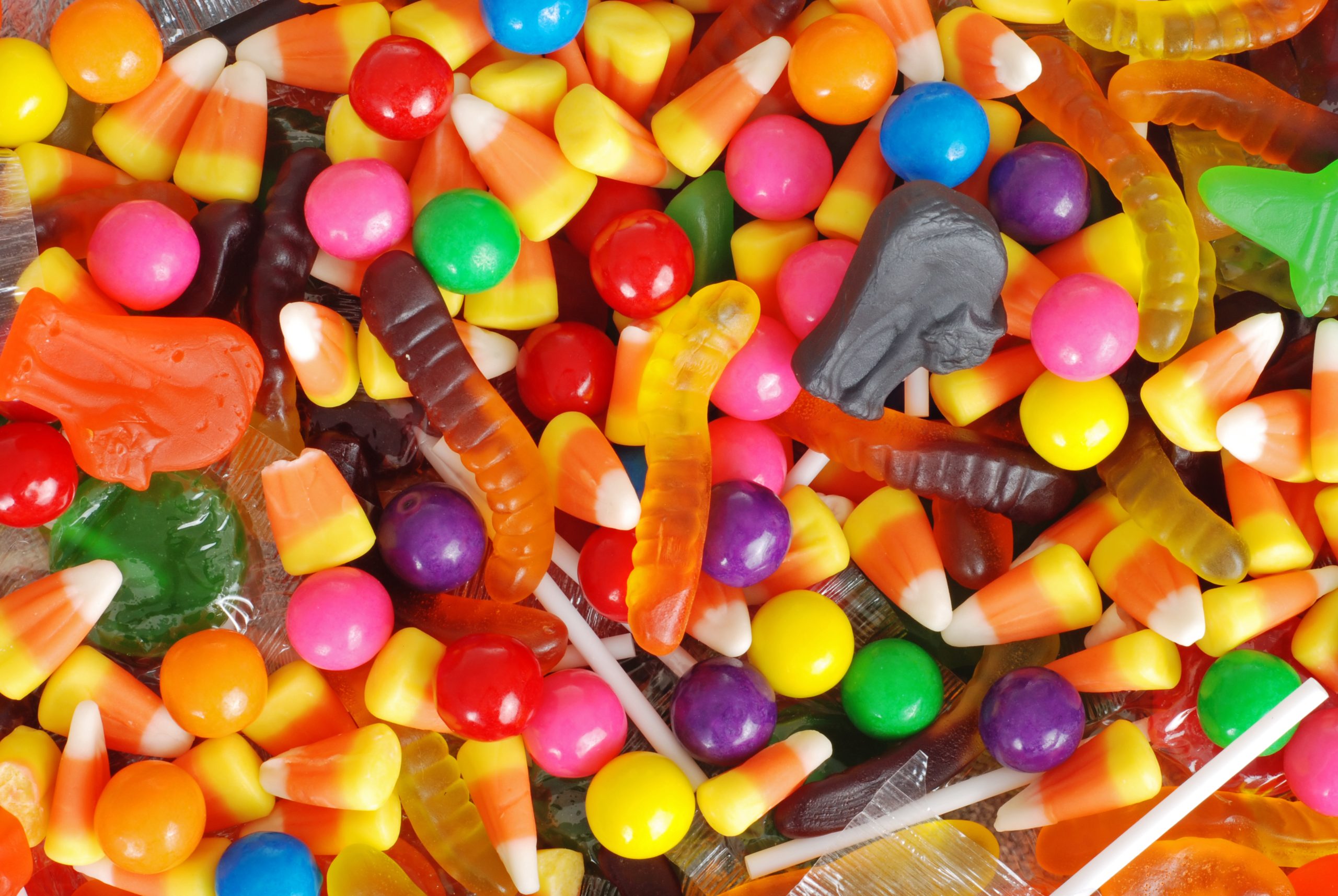
That changed as the 20th century progressed. Commercial candy became increasingly available, inexpensive and heavily marketed. By the middle of the century, packaged candy was becoming the convenient choice for Halloween. Individual wrapping also made it easier to distribute treats to large numbers of children.
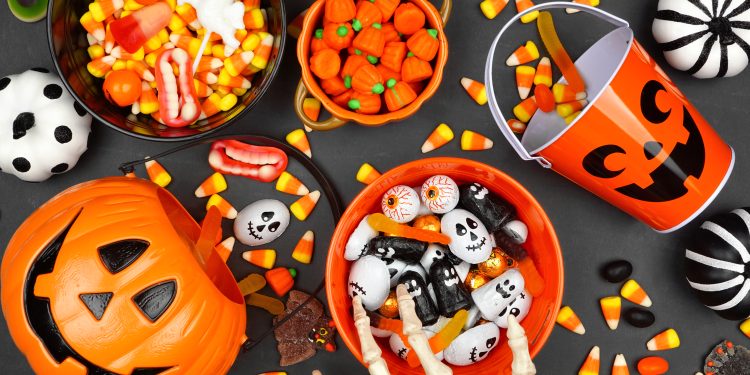
Eventually, the homemade cookie and shiny red apple gave way to the modern Halloween haul in a plastic pumpkin or grocery bag.
Still, there is something charming about the old-fashioned version of Halloween. A child knocking on a neighbor’s door wasn’t necessarily expecting a miniature candy aisle. A cookie made in someone’s kitchen, an apple from the backyard tree or a handful of nuts was considered a perfectly good Halloween treat.