

Candy didn’t become a central part of Halloween overnight. Early American Halloween celebrations were influenced by older European traditions involving costumes, mischief and food, but the candy explosion came much later.
By the early 20th century, sweets were increasingly part of the festivities. The real trick-or-treating tradition took hold in the United States during the 1930s and 1940s. By the postwar era, candy had firmly established itself as Halloween’s official currency.
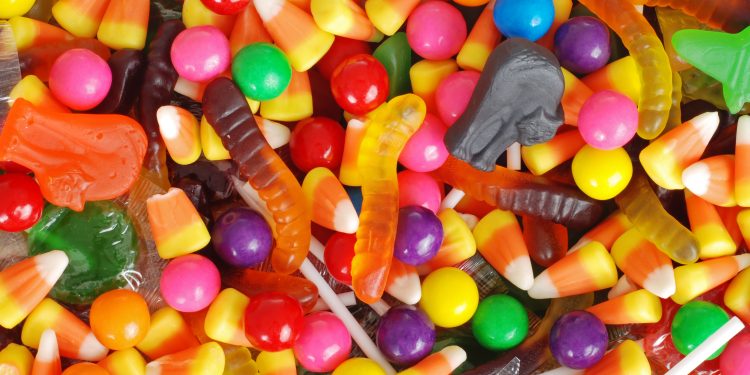
The exact birth date of candy corn is a little fuzzy, but it was being made commercially in the 1880s. That makes it the elder statesman of the Halloween candy world — assuming anyone actually likes it. (I cannot understand the allure)
Then came the Tootsie Roll in 1896, followed by the Hershey Milk Chocolate Bar in 1900. By the early 1900s, America was discovering an important truth: chocolate tastes even better when someone else has to pay for it.
Hershey’s Kisses arrived in 1907, and Life Savers in 1912. The 1920s were particularly productive. Baby Ruth and Mounds appeared in 1920, Butterfinger and Milky Way in 1923, Bit-O-Honey in 1924, and Milk Duds in 1926. Reese’s Peanut Butter Cups followed in 1928, proving once and for all that chocolate and peanut butter were a match made in heaven.
Then came Snickers in 1930, 3 Musketeers in 1932, and Kit Kat in 1935. Nestlé Crunch arrived in 1938. By the middle of the century. M&M’s debuted in 1941, providing a colorful little button of chocolate that could survive being carried around in a soldier’s pocket.
Whoppers arrived in 1949 and then came Twix in 1966.
What makes the history of Halloween candy so much fun isn’t simply the candy itself. It’s the memories attached to it.
For one generation, Halloween meant dumping the contents of a pillowcase onto the living-room floor and sorting the treasure into piles: chocolate, good stuff, questionable stuff and candy that could be traded away without remorse.
There were also the houses everyone knew. The neighbor who gave out full-size candy bars was legendary. The house handing out apples was viewed with deep suspicion. Today, Halloween candy comes in more varieties, sizes and flavors than anyone could possibly need. But the basic formula hasn’t changed much in more than a century:
Some traditions, thankfully, never die.