

Long before multiplexes dominated the landscape, drive-in theaters offered moviegoers a uniquely American way to enjoy films beneath the stars. The first drive-in theater was opened on June 6, 1933, in Camden, New Jersey.
The golden age of the American drive-in theater lasted from the late 1940s through the mid- 1960s. The post-World War II boom in automobile ownership, suburban growth, the Baby Boom, and affordable family entertainment combined to make drive-ins one of the nation’s favorite pastimes.
The U.S. had just over 4,000 drive-in theaters in 1958. By the mid-1960s, the industry began to decline as television, multiplexes, rising land values, and later home videos reduced attendance. Today, only about 300 drive-in theaters remain in operation across the country.
At drive-ins, teenagers enjoyed dates beneath the stars and parents appreciated being able to take young children without worrying if they became restless. The outdoor setting had a relaxed atmosphere that indoor cinemas couldn’t match, making it a summertime tradition for many families.
In my youth, there was something magical about a summer evening at a drive-in. Long before the movie began, the younger children raced across the playground, silhouetted against the giant white screen.
As darkness fell, everyone settled into their cars and lawn chairs. Irresistible aromas drifted from the concession stand, tempting everyone to make one more snack run. Back at the car, the familiar crackle and tinny sound of the metal window speaker signaled that show time had arrived.
The Waynesburg Drive-In
The Waynesburg Drive-In Theatre opened on June 29, 1950. It was located in West Waynesburg just off Route 21 and was designed to accommodate 300 vehicles. The first film shown was The Boy from Indiana, starring Lon McCallister.
The theater was owned privately for a time and later became part of the Cinemette Corporation of America during the early 1970s. Throughout its operation it showed first-run Hollywood films that attracted audiences from all over the county and neighboring West Virginia communities.
Eventually it closed and was later demolished. Today, no visible traces of the screen or projection building remain. Although it disappeared decades ago, that Drive-In occupies a special place in local memory. For many residents, it wasn’t simply a movie theater—it was a summertime tradition where first dates began, families gathered, and lifelong memories were made.
For me, those memories include going there with my parents every Fourth of July to watch the fireworks from the rear-facing seat in our Ford LTD station wagon. I think the statute of limitations has run out, so I can share another vivid memory of the place. In high school, my buddies and I would take turns hiding in the trunk to sneak in (because young boys are stupid). I feel bad about that now, but I’m pretty sure that’s not what caused them to close.
The Skyview Drive-In
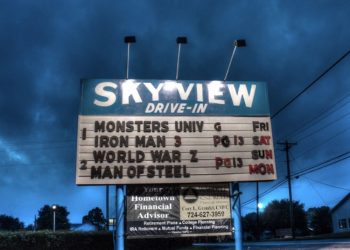
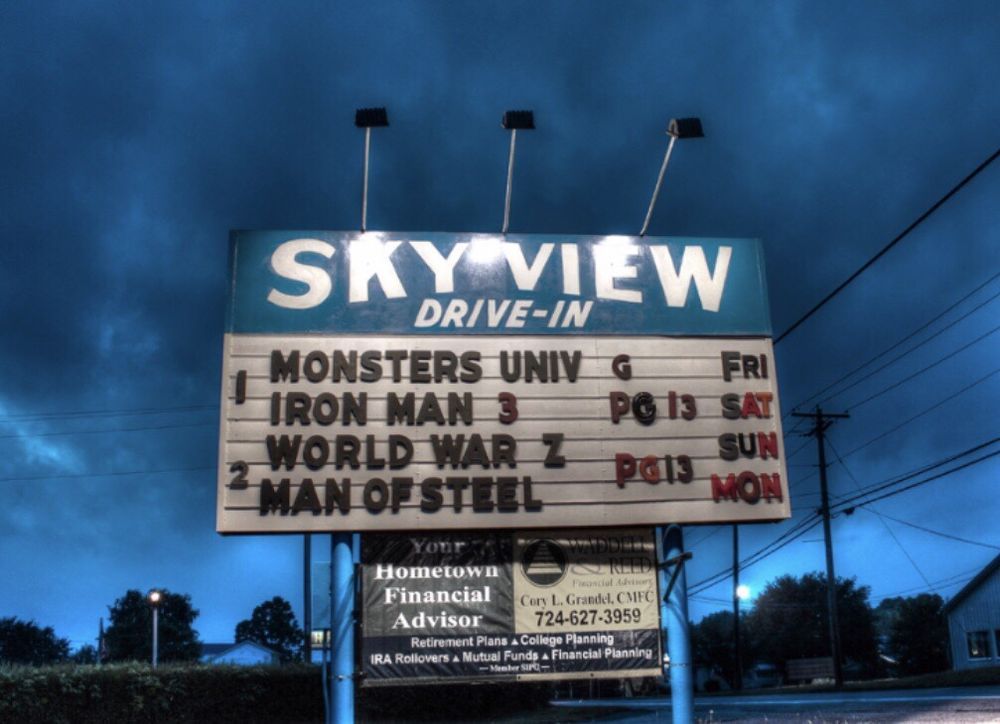
Just north of Carmichaels along Route 88, the Skyview Drive-In opened in 1946. It was one of Pennsylvania’s oldest drive-in theaters when it ceased operations in 2020.
The Skyview quickly became a summertime tradition for families throughout Greene County. Moviegoers could choose between two screens, each showing a double feature.
Patrons parked beneath the stars, hung speakers on their car windows in the early years, and later tuned into FM radio for movie sound. I remember seeing such classics as the original Star Wars, Ghostbusters, and Gremlins at the Skyview.
Unlike many drive-ins that disappeared after the 1980s, the Skyview continued operating for decades because of the dedication of local owners and community support. Its closing deeply affected the community because of the visceral attachment of so many memories associated with those summer evenings.
The Blue Horizon
Just south of Mt. Morris, the Blue Horizon Drive-In opened on May 9, 1957, with a double feature that included Bhowani Junction starring Ava Gardner and It’s a Dog’s Life starring Jeff Richards. It was built during the peak of America’s drive-in boom, when hundreds of outdoor theaters were opening across the country.
The Blue Horizon remained in operation until 1985. Like many drive-ins, it eventually succumbed to changing entertainment habits, rising operating costs, and competition from multiplex theaters and home video. The property has since been redeveloped, and Coastal Drilling East now occupies the site.
Most young people do not realize that I-79 to Morgantown was not open until the summer of 1975. The screen for the Blue Horizon was not visible from Route 19 on your way to Morgantown. However, from the elevated height of I-79, one could watch 20-30 seconds of that evening’s films depending on how fast you were driving.
Back in the day, the Blue Horizon occasionally featured low-budget films that offered salacious scenes. One had to be careful on the way to Morgantown and be prepared for a cluster of brake lights if the timing was wrong (or right depending on your point of view).
Other Local Drive-ins
During those decades, a quick check of the newspaper revealed listings for Mauldin Drive-In in Richeyville, Fixes Drive-In in Brownsville, and the Route 19 Drive-In at the current site of Washington Ford. We gladly hit the road to take-in whatever movie was playing – whether it was some B-movie double feature or a Hollywood blockbuster. Afterall, the movie was just part of the overall experience of an evening beneath the stars.