

The Denny sisters paint a vivid picture of what life was like for those with means in the early 20th century. Step into the Denny House today, and you step into their world—freshly restored and ready to be enjoyed by a new generation.
Mary and Helen married, built glamorous careers in opera and music, and spent most of their lives in Chicago and traveling abroad, far from their hometown.
Middle sister Josephine chose a different path—and the Greene County Historical Society Museum on Rolling Meadows Road can thank her for it.
Josephine earned her Bachelor of Science degree in 1915 and, like her sisters, set off to explore the world. After studying abroad and teaching in private schools, she returned home unmarried to live with her mother. Her life became one of steady service to the community through social and educational work, including teaching science at Central Greene High School. In 1960, she helped establish the Cherry Door Thrift Shop and the Social Service League, further strengthening the county’s charitable and civic outreach.
As the world shifted after World War II and modern culture took hold, a matronly Miss Denny—now in her late 70s—found a new mission: preserving the beauty, craftsmanship, and good taste of the past that still filled every room of her elegant High Street home.
In 1965, when the old poor county farm closed, residents moved across Rolling Meadows Road to the modern convenience of Curry Nursing Home. The stately 1840s brick mansion, with its poorhouse additions, was reclaimed by the county—only to sit vacant for five years while commissioners debated its future.
Then came Josephine Denny and the Greene County Historical Society.
As president of the organization, which had been salvaging local history since the 1920s, Miss Denny was ready to save the artifacts of the life she had known. While little is recorded about the conversations she must have had among families with pioneer pedigrees and inherited estates, the results were clear: when she led the charge to petition the county for stewardship of the property and buildings, donations poured in.
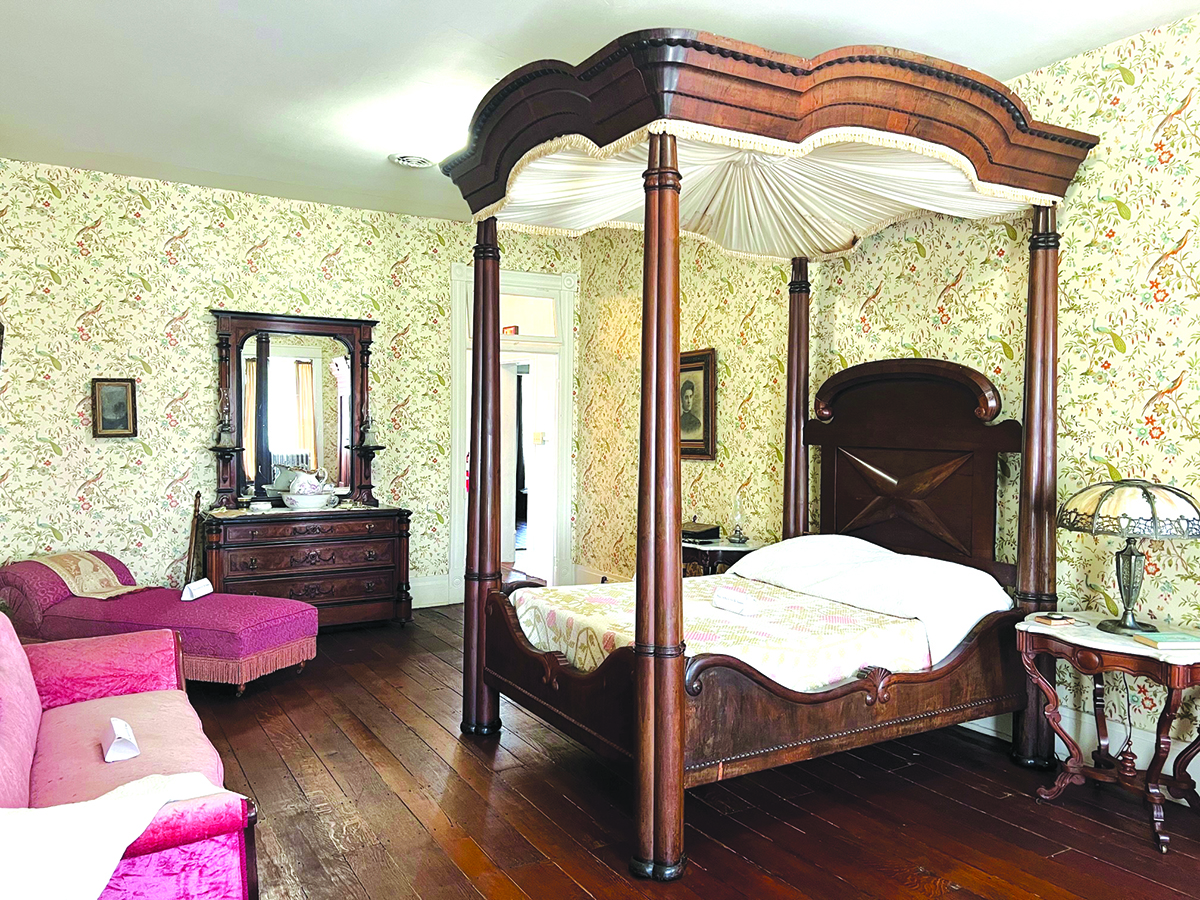
Victorian furniture, garments, appliances, and photographs arrived in quantities large enough to recreate the parlors, dining rooms, music rooms, and bedrooms Miss Denny remembered so well.
She often reminded visitors that what she helped create was a museum—not a mausoleum—a place to keep history alive and accessible to all who wished to experience the past.
Today, the Denny House has become a museum piece in its own right, restored by Pam and Kent Marisa to much of its original elegance. It now welcomes guests for parties, cultural events, weekend retreats, and—of course—fairytale weddings.
It’s not hard to imagine Miss Denny smiling.