

The athletes who lost prime years to military service occupy a unique place in sports history. Their sacrifices force us to view statistics and records through a broader lens.
Beyond the numbers, their stories embody a sense of patriotism and selflessness. At a time when military service was seen as duty, these men left behind fame, fortune, and personal milestones to serve something greater. Their willingness to sacrifice illustrates that sports, however beloved, were still secondary to national needs.
Professional athletes who lost prime years to the military gave up more than games. They gave up irreplaceable time, glory, and records that would have defined their careers. But perhaps the true greatness lies in what they did off the field. These athletes showed that even the most celebrated stars were willing to sacrifice personal ambition for the sake of country. In doing so, they wrote a different kind of legacy, one measured not in statistics, but in service.
World War II
Ted Williams
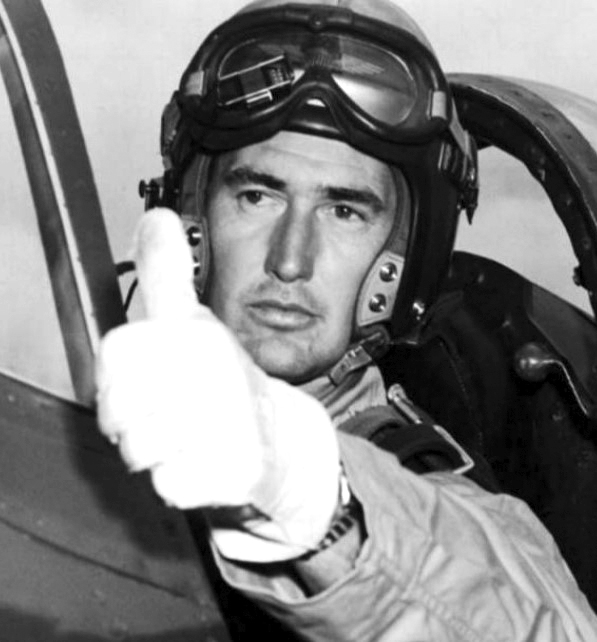
Few stories illustrate the cost of service to athletic greatness better than Ted Williams. Known as “The Splendid Splinter,” Williams is widely regarded as one of the greatest hitters in baseball history. But his career was interrupted not once, but twice.
In 1942, at the peak of his powers, Williams won the Triple Crown. Rather than continue dominating pitchers, he enlisted in the U.S. Navy and became a flight instructor and later a Marine Corps pilot. He missed the 1943–1945 seasons entirely. Most remarkably, Williams returned from the war and picked up right where he left off, winning his second MVP in 1946 and leading the Red Sox to the World Series.
Yet his service didn’t end there. In 1952, during the Korean War, Williams was recalled to active duty and flew 39 combat missions as a pilot, serving alongside future astronaut John Glenn. In total, Williams lost nearly five full seasons during his prime. Had he played uninterrupted, many historians argue he might have reached 700 career home runs.
Joe DiMaggio
Iconic Yankee center fielder Joe DiMaggio, also saw his career interrupted. By 1943, DiMaggio had already won three MVP awards and led the Yankees to six World Series titles. But instead of padding his statistics, he spent three years in the U.S. Army Air Forces.
DiMaggio’s service kept him off the field from ages 28 to 30, critical years for a player’s career. When he returned in 1946, he was never quite the same dominant force. Nonetheless, he still finished his career with a .325 batting average and nine World Series rings. However, the lost years will always create a sense of “what if ?”
Bob Feller
Pitchers often have shorter windows of dominance, which makes Bob Feller’s sacrifice even more striking. In December 1941, the 23-year-old Cleveland Indians’ ace became the first Major League player to enlist in World War II after the attack on Pearl Harbor.
Already a three-time All-Star with a blazing fastball, Feller could have stayed stateside and continued playing, but he volunteered for combat duty in the U.S. Navy and served as a gun captain on the USS Alabama. He spent nearly four years in the military, missing the 1942–1944 seasons and most of 1945.
Despite the interruption, Feller still won 266 games and struck out over 2,500 batters. Without the lost years (He was averaging 25 wins and 260 strikeouts a season at that time), he could have easily ended up among the top three pitchers all-time in both categories)
Hank Greenberg
Detroit Tigers slugger Hank Greenberg was the first major baseball star drafted into World War II service, missing most of 1941 and then all of 1942–1944. He was known as “Hammerin’ Hank,” and was a two-time MVP and had already won a home run title.
He returned in 1945 and famously homered on the final day of the season to clinch the American League pennant for Detroit. Still, his career totals (331 home runs and 1,276 RBIs ) would have been significantly higher had he not sacrificed nearly four full years.
Glenn Davis
Nicknamed “Mr. Outside,” Davis was a college football star at Army during World War II, winning three National Championships and the 1946 Heisman Trophy. His professional career with the Los Angeles Rams was delayed until 1950 due to military service. Although he missed what would have been his early professional peak years, he played in two NFL championships with the Los Angeles Rams in 1950 and 1951 before a knee injury ended his career.
Chuck Bednarik
Chuck Bednarik, later famous as the last full-time two-way player in the NFL, also served in World War II. Bednarik was a waist gunner on a B-24 bomber and flew 30 combat missions over Europe. While he still went on to a Hall of Fame career with the Philadelphia Eagles, his service delayed his entry into professional football.
Joe Louis
Heavyweight champion Joe Louis voluntarily enlisted in the U.S. Army in 1942, spending prime years touring bases, fighting exhibitions, and boosting morale rather than defending his title. While he retained the championship, critics argue his skills eroded from inactivity against top-level opponents.
Korea
Willie Mays
The “Say Hey Kid,” was only 21 years old and fresh off winning the 1951 National League Rookie of the Year award when he was drafted into the U.S. Army during the Korean War. He missed nearly two full seasons (1952–1953).
When he returned, he quickly regained his brilliance, ultimately hitting 660 home runs, winning two MVPs, and cementing himself as one of the greatest all-around players in history. Yet, if we imagine those lost seasons at his prime age, he would have reached or surpassed 700 home runs, making the home run chase of the 1970s and 2000s a very different story.
Jerry Coleman
Jerry Coleman, of the New York Yankees, is unique in being the only Major League Baseball player to see combat in both World War II and Korea. He missed three full seasons across both conflicts. Though not a Hall of Fame-level player, Coleman still became an All-Star and World Series champion. However, his playing career never reached the statistical heights it might have.
Vietnam and the Later Years
By the time of the Vietnam War, professional sports had grown into enormous commercial enterprises, and draft deferments became more common for athletes. However, some still served.
Rocky Bleier
Pittsburgh Steelers running back Rocky Bleier was drafted into the Army in 1968 after his rookie NFL season. He was seriously wounded in Vietnam, suffering injuries to his legs and feet from grenade shrapnel. Doctors told him he would never play again, but Bleier defied the odds and eventually returned to become part of the Steelers’ four-time Super Bowl dynasty in the 1970s.
Honorable Mentions
Outfielder Hank Bauer (MLB): Served in the Marines during WWII, saw heavy combat before MLB stardom; Phil Rizzuto (MLB): Yankee shortstop who lost three full seasons to WWII; The Naval Academy’s Roger Staubauch (4 years) and David Robinson (2 Years) both served their military commitments before starting their Hall of Fame careers.