


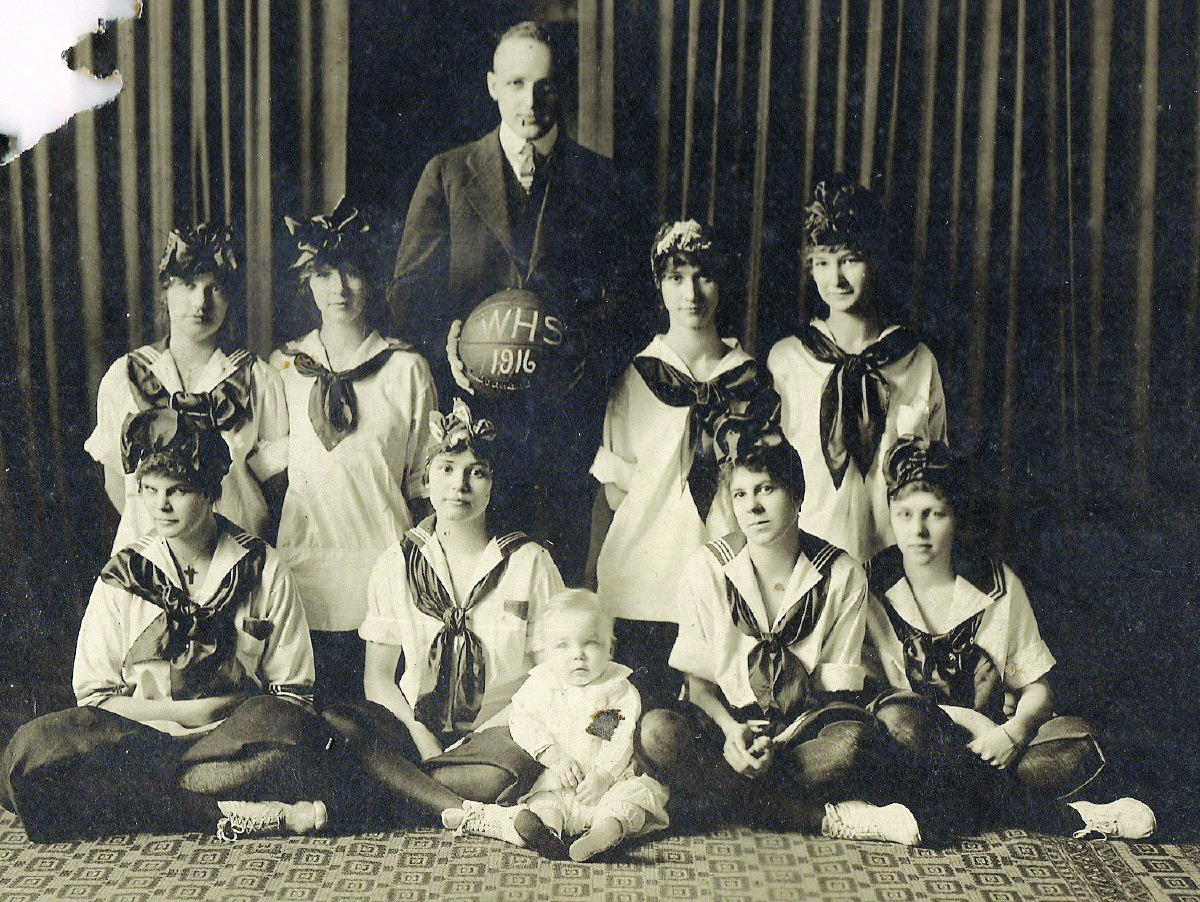
At the turn of the 20th century, women’s sports in the United States were quietly gaining ground. Female athletes competed in basketball, tennis, swimming, golf, and track. These early opportunities reflected the broader Progressive Era belief that physical activity promoted health, discipline, and moral character—qualities increasingly seen as acceptable for women.
Yet this early momentum would not last. By the 1930s, women’s sports began a long period of decline that stretched well into the 1970s, shaped by cultural backlash, economic hardship, and institutional resistance.
In the early 1900s, women’s basketball flourished in high schools and colleges, albeit with modified rules. Tennis stars like Helen Wills became national celebrities, and women competed in the Olympics as early as 1900. Physical education programs for girls expanded, often led by female educators who believed sport could empower young women without undermining femininity.
This evolution was evident in Greene County as well. During the 1913-14 basketball season, the Waynesburg High School girls played a home and away series against Claysville, Martin’s Ferry, Ohio, and East Washington. They split their games with the first two opponents, but were swept by East Washington, who according to the local newspaper “played very rough for girls.” Mary Munnell was the star of the team. She and her teammates Adna Faddis and Mary Sayers went on to play at Waynesburg College.
The Cumberland Township High School girls began playing in 1920 as part of double headers with the boys’ team. Their first season, they played Jefferson and McClellandtown.
Mary Martha Baily led them to the county championship in 1923. In 1926, the team was 19-3 and beat Redstone, the Fayette County Champions. They even split a pair of games with the powerful Waynesburg College women’s team. By the end of the decade, they were playing large schools like Canonsburg and Charleroi.
They also won the County Tournament in 1929 with Harriet Baily, Sara Cree, Elizabeth Dugan, Annabelle Crago, and Bernice Riley
The names on the Jefferson girls’ teams of that day were also familiar: Faddis, Hathaway, Dugan, Baily, Eaton, Johnson, and Kline.
The Monongahela Township girls started playing in 1926, and by 1929 they were undefeated in the regular season, beating a powerful German Township squad.
Even tiny Nineveh High School had a girls’ team in 1929. They lost badly to Claysville, but the next game beat a powerful Washington team 18-10. The players’ names would sound familiar today: Hopkins, Clutter, Lightner, McCullough and Huffman. They also beat a Mt. Morris High School team filled with Foxes, Donleys and Kennedys
The Waynesburg College women regularly sold out the armory. Their home game against top-ranked Pitt was a big deal in town. They even hired an orchestra to play for a dance after the game. However, a fight broke out between the teams, and the game was called early when Waynesburg’s Mary Munnell fouled out but refused to leave the court.
The enthusiasm and equality were also evident on the local diamonds. The Democrat Messenger reported a well-attended baseball game between the women of Ned and Pine Bank. Ned won in a 28-19 slugfest.
Perhaps the most amazing story of that era occurred in 1920. At a time when men’s independent baseball was at its zenith in the area, the West Waynesburg American Steel team was a highly respected regional team.
Westinghouse Electric sponsored a women’s barnstorming team, who had compiled a 20-8 record against the top independent men’s teams in Western PA and Ohio. On the day of the big game, Waynesburg shops closed in town and farmers came in from their fields to watch the much-anticipated clash. The crowd was stunned when the women left town with a 13-12 victory.
Unfortunately, as women pushed boundaries, concerns grew. Medical “experts” and social commentators warned that competitive sports could damage women’s reproductive health or make them “unladylike.” During the Great Depression, traditional gender roles reasserted themselves. Funding for women’s athletics dried up.
By the 1930s and 1940s, many schools replaced interscholastic competition for women with intramural programs. The goal shifted from competition to participation, emphasizing grace, cooperation, and social development.
World War II briefly disrupted these patterns. As women entered factories and military support roles, they also stepped into athletic spaces left vacant by men. The All-American Girls Professional Baseball League symbolized this moment of possibility. But once the war ended, so did the progress. Women were once again encouraged to return to domestic roles.
The postwar period entrenched the marginalization of women’s sports. Television, corporate sponsorships, and school athletic budgets overwhelmingly favored men. By the 1950s and 1960s, girls had almost no access to competitive teams, coaching, or facilities.
This long decline was not accidental; it was institutional. Administrations openly questioned whether women’s sports were worth supporting. The message was clear: sports were for men, and women’s participation was a privilege, not a right.
That reality changed in 1972 with the passage of Title IX, a federal law prohibiting sex-based discrimination in any educational program receiving federal funds. Title IX transformed women’s sports more than any single event in U.S. history. Schools were suddenly required to provide equitable opportunities and resources for female athletes.
Title IX did not create women’s sports. What it did was restore and legitimize what had been systematically diminished for decades. The explosion of participation in the years that followed was not a cultural accident—it was a correction.
The story of women’s sports in the 20th century is not a straight line of progress, but a cycle of advance, backlash, and renewal. Understanding that history reminds us that gains in equality are neither inevitable nor permanent—but when supported by law and culture, they can be transformative.