


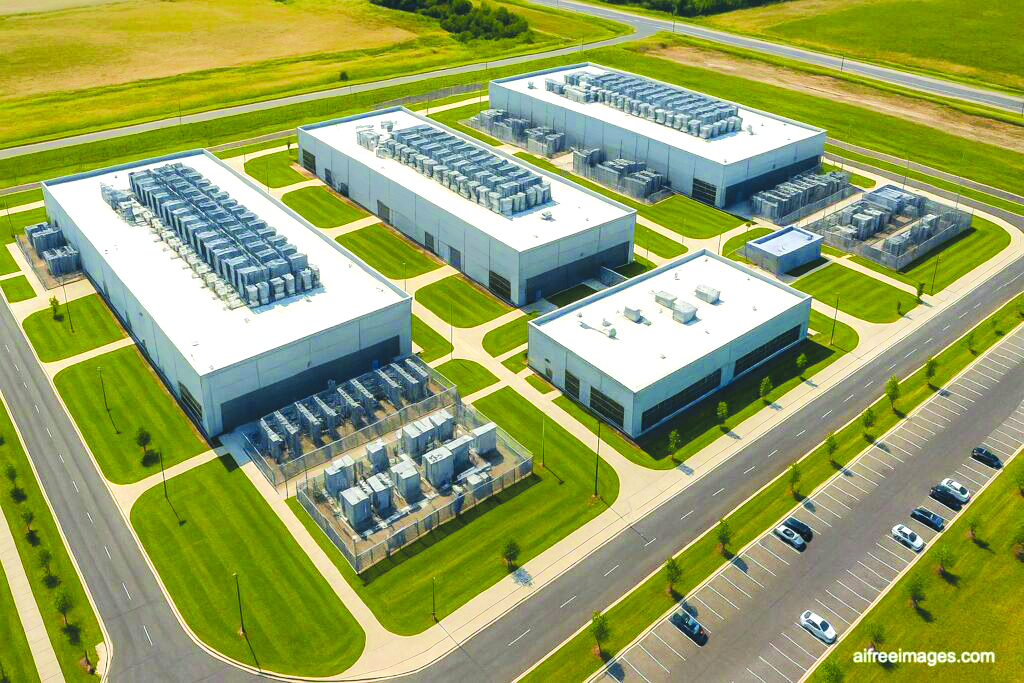
Recent online discussions have inspired this article, which aims to accurately inform readers about the roles government plays in the development of local properties. The construction of a new car wash on the former Tommy Boy’s site and the “Hummingbird Project” proposal for a data center in Alicia, Monongahela Township have sparked debates and, at times, the spread of misinformation.
Today, individuals have unprecedented opportunities to express their opinions on social media platforms, speak at public meetings, or protest in the streets. Gone are the days of published Op Eds that have been vetted by an editor and screened for appropriateness and accuracy. All platforms of social media have an audience eager to respond, a cheering section for angry “keyboard warriors.” For whatever reason: frustration, rage, resentment, indignation, or society’s inability to hold authors accountable, allow for the publication of theories, statements, and declarations which are often wrong.
There are a significant number of regulations, codes, acts and permitting requirements that must be adhered to in the development of properties by individuals, businesses, or industry. All these requirements are for the protection of people (safety), physical property, environmental, and – sometimes – property values. This article will clarify the roles of government bodies and programs with respect for business/industry development.
The Greene County Commissioners
County Commissioners DO NOT pick and choose the next businesses. The Commissioners are responsible for the fiscal affairs of the county, including the annual budget, levying real estate taxes, and the investment of county funds. Daily operations of county government are administered via five primary departments: Finance & Administration, Law & Order, Human Services, Economic Development, and Recreation. Generally, through their administration, commissioners work to provide an environment appealing to future (taxable) growth. In providing a safe environment, access to required infrastructure and utilities, county government can entice future business and industry investment. The commissioners’ responsibilities are diverse and can be complex; however, they play no role and have no authority in the sale or transfer of property from one individual or company to another.
I’ve seen the statement, “County Commissioners are not representing me!” That’s likely a true statement if “me” is an individual or a small specific group of constituents. Commissioners are elected to represent Greene County as a whole. They are charged with making the best decisions for the total population of Greene County. Their representation of the whole population is more appropriate when considered as it applies to relationships with the state government, regional relationships, and across adjoining state lines (neighboring WV counties).
The Greene County Planning Commission
Let us now look at how the Planning Commission fits into the process. The Greene County Planning Commission is a 9-member board of varied experiences and expertise with jurisdiction and control of the subdivision of land and development located within the county limits as set forth in Act 247, Pennsylvania Municipalities Planning Code. The board’s authority is with approval or review of proposed subdivisions or development. The board ensures all legal requirements are met. Their authority does not extend to choosing whether a business or industry is desired, only that it meets all established constraints.
In its simplest form, Act 247 is the legal backbone for local land use (zoning) and land development processes in Pennsylvania, giving towns and municipalities the authority to decide what gets built where. Unfortunately, in 2021 when County Commissioners encouraged and the planning commission held zoning workshops for municipalities, not a single township participated. As a matter of fact, Township Supervisors were threatened with being black-balled in the next election if they considered zoning. This is why there is currently no zoning protection in most townships. The people said, “Government will not tell me what I can or cannot do with my property.” So, here we are with no protection for property owners by their own choice.
Non-Disclosure Agreements (NDA)
The term Non-Disclosure Agreements (NDA) stirred a lot of emotional discussion. These are standard agreements within government and business/industries. A non-disclosure agreement is a legally binding contract that establishes a confidential relationship between two parties (In this discussion, between government and industry) It outlines the sensitive information that one party wishes to share with the other for specific purposes while restricting access to that information. NDAs are commonly used to protect proprietary information and other confidential data from being disclosed to third parties without authorization. They do not insinuate conspiracies, preferential treatment, or collusion. It is not government’s responsibility to tell constituents about new property owners’ intentions, only that the business/industry has met all constraints for development.
Tax Abatements
The Greene County Tax Abatement Program is a tax exemption for new development within Greene County. For the program to be applicable, all three of the elected bodies (county, municipality and school district) must adopt the program to benefit their own residents and to promote growth in their jurisdictions.
The Greene County Tax Abatement program is a 5-Year Modified Basis program with Year one 100%, Year two 80%, Year three 60%, Year four 40% and Year five 20% relief of property taxes. The abatement program is for taxable improvements. Land is not eligible for tax abatement. There is no process nor provision for the taxing bodies; county, municipality and school district to give preferential treatment or extensions of the tax abatement program. All housing, business and industry get treated the same for the same duration.
You Don’t Get to Choose Your New Neighbor
If your neighbor decides to sell their property—whether it’s a town lot, subdivision estate, or a large farm—you or the community have no legal right to select the new owner. Government agencies, Planning Boards, and Conservation Districts ensure compliance with laws and regulations, but the sale of private property remains a transaction between the seller and buyer. In cases like the proposed data center, in the absence of zoning, there are no inherent protections for property owners.
It is not government’s responsibility to tell constituents about new property owners’ intentions; however, it may be beneficial for businesses and industry to inform the adjoining and potentially affected property owners of their plans. Being good neighbors goes a long way to quell anger and distrust in the neighborhood.
Whether the development is a car wash or a data center, the government’s role remains consistent regarding privately owned property. It ensures compliance with established regulations, codes, acts and permitting requirements. Politicians would do themselves a favor by not claiming “progress” or “success” when they have nothing to do with the proposed sale or development of properties – it only muddies the waters of public perception.