

One of the things that I remember about middle school was something that one of my teachers frequently shared with the class. She said that “There’s a price to pay for every choice you make.” I don’t recall if that was her way of telling us that if we didn’t do our homework, the price would be detention or if there truly was a deeper meaning, but either way, her words stayed with me.
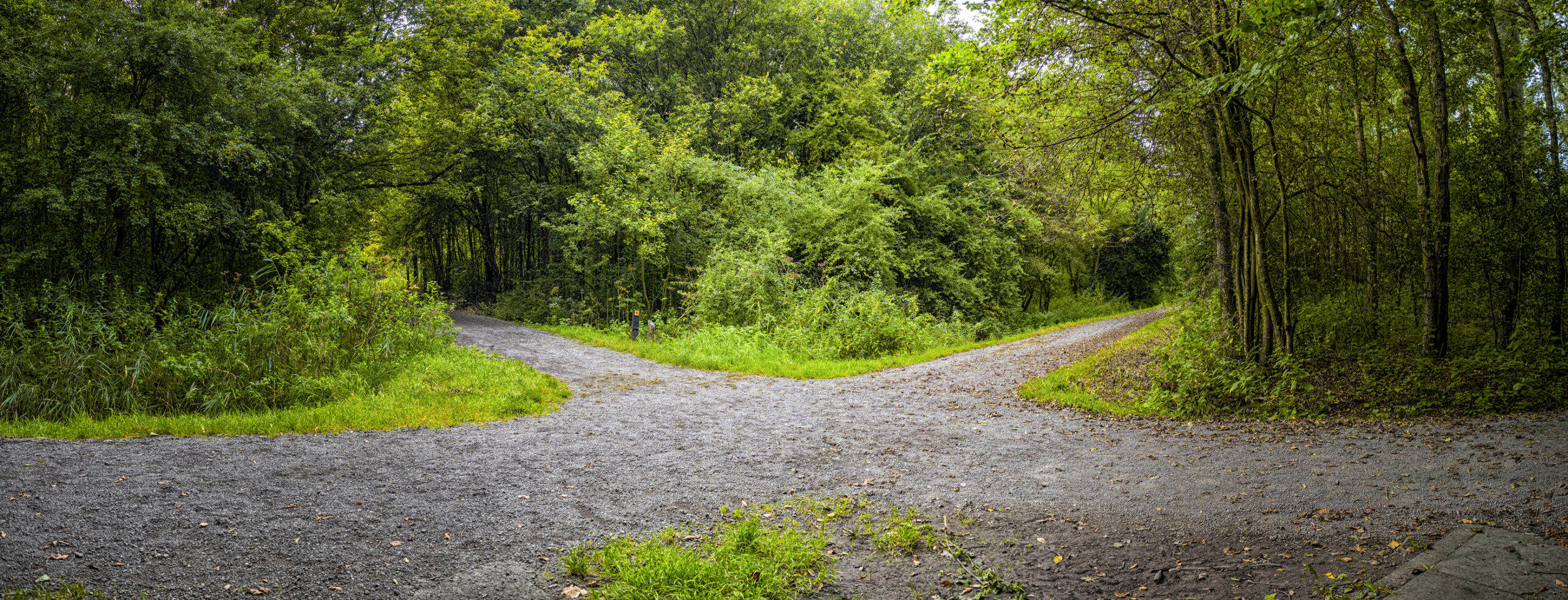
Life is a continuous series of choices, some small and forgettable, others so significant that they shape the direction of our future. From career paths to relationships, from moral decisions to moments of quiet courage, our lives are defined not only by what we choose, but also by what we leave behind. Few literary works capture this universal experience as succinctly and powerfully as Robert Frost’s poem “The Road Not Taken,” in which a traveler stands at a fork in the woods, forced to choose one path over another.
In everyday life, choices rarely come with clear instructions or guarantees. Like the traveler in Frost’s poem, we often pause at crossroads, wishing we could see further down each road before committing. We want certainty and proof that one decision will lead to happiness or success while the other will not. Yet Frost reminds us that this certainty is an illusion. Both roads are described as “really about the same,” equally worn and equally unknown. This reflects real life, where options often appear different on the surface but carry similar risks and unknown outcomes.
One of the most striking aspects of Frost’s poem is its honesty about irreversibility. The speaker acknowledges that “way leads on to way,” doubting he will ever return to try the other road. Life works much the same way. While we like to believe we can always change course, many decisions quietly close doors behind us. Choosing one career may mean abandoning another passion and choosing one place to live may mean drifting away from certain people. These losses are not always dramatic, but they are real.
At the same time, the poem explores how humans assign meaning to their choices after the fact. The speaker imagines himself in the future, saying that taking the road “less traveled by” made all the difference. This line is often interpreted as celebrating individualism, but it is more complex than that. Frost suggests that we create narratives to justify our decisions, shaping our memories to give our lives coherence and purpose. In reality, the difference may not have been inherent in the road itself, but in the act of choosing and committing to it.
So, here’s a piece of my mind… “The Road Not Taken” reflects a fundamental truth about life choices: their power lies not only in the options before us, but in how we live with them afterward. Life does not hand us perfect answers, only moments of decision. Like the traveler in the woods, we choose with incomplete knowledge, move forward without looking back too often, and later tell ourselves a story about who we became because of it. In that sense, every life is a poem written one choice at a time, shaped as much by reflection as by action.