


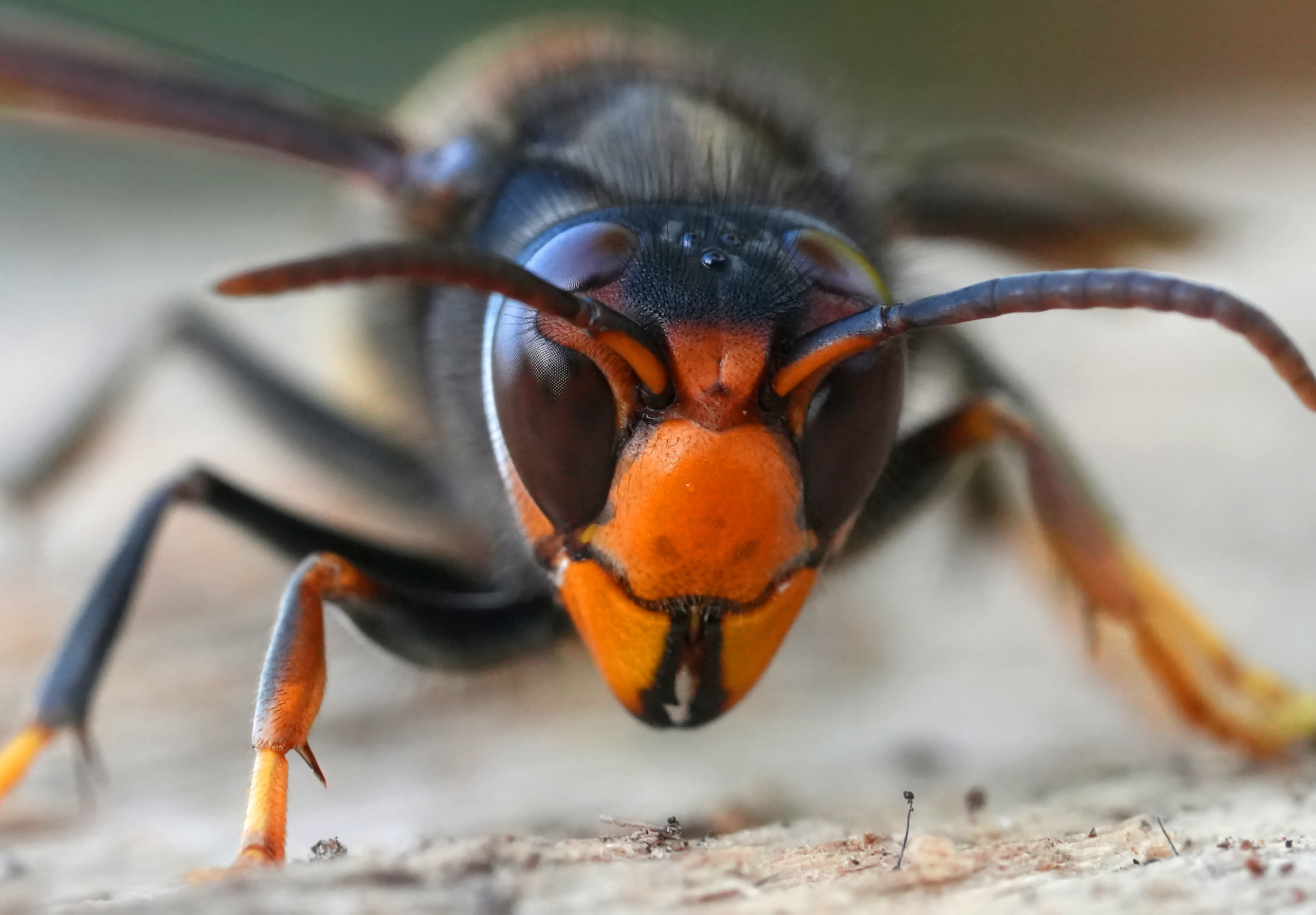
A bad encounter recently left me with several stings and considerable pain as I attempted to mow around a tree in my orchard. Unbeknownst to me, a basketball-size hornet nest was hovering in the low branches of an apple tree, and my encroachment was not welcome. Uncharacteristically for hornets, they had no issue with me trimming around the tree a short time earlier…more notably, and to my surprise, the nest was not there last week when I performed the same routine.
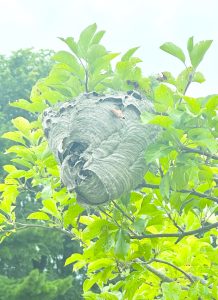

Bald-face Hornet Nest
Wasps and hornets can quickly become a serious nuisance around homes, businesses, gardens, and outdoor spaces. According to the CDC, 72 people die every year from their stings. While these insects play an important role in controlling other pests and supporting the ecosystem, they can become aggressive when their nests are disturbed as I found out. Professional wasp and hornet control can help protect people, pets, and property while safely addressing an active infestation, but many choose to handle the problem themselves.
Wasps and hornets commonly build nests in roof spaces, wall cavities, lofts, sheds, garages, trees, bushes, and other sheltered locations. Some species may also construct nests underground. Because nests can contain hundreds or even thousands of insects, attempting to remove or treat one without the appropriate knowledge and equipment can result in multiple stings and may cause the colony to become defensive.
Effective wasp and hornet control begins with identifying the species and locating the nest. A professional pest control technician can assess the activity, determine the safest treatment method, and identify potential entry points. Treatment is generally designed to eliminate the active colony while reducing the risk of exposure to people and animals nearby.
Nest removal is an important part of dealing with some infestations, although it should only be carried out when it is safe and appropriate to do so. Simply knocking down an active nest can provoke the insects and does not necessarily eliminate the colony. Depending on the nest location and species involved, treatment may need time to take effect before the nest can be safely removed.
I opted for a late-night visit under the cover of darkness with a full can of wasp and hornet spray that has the ability to reach the nest from a distance. Success was immediate as I watched the hornets fall to the ground in the beam of my flashlight.
Preventative measures can also help reduce the likelihood of future wasp and hornet problems. Inspecting buildings for gaps, cracks, and other potential entry points can make it more difficult for insects to establish nests. Keeping food and rubbish securely covered, especially during warmer months, can also reduce attraction around outdoor areas. Gardens and buildings should be checked regularly for early signs of nesting activity.
If you discover a wasp or hornet nest, avoid disturbing it and keep children and pets away from the immediate area. Increased insect activity around a particular hole, roofline, tree, shed, or other structure may indicate that a nest is nearby. Do not attempt to block an active entrance, as this can cause insects to seek alternative routes into a building.
Professional wasp and hornet control provides a safer and more reliable way to deal with established nests. Experienced technicians have the equipment, protective clothing, and knowledge needed to assess the situation and carry out treatment appropriately.
Whether you have noticed a small amount of wasp activity or discovered a large nest, acting promptly can prevent the problem from becoming more difficult to manage. Professional inspection, targeted treatment, and, where appropriate, safe nest removal can help restore peace of mind and keep your property safer throughout the warmer months.