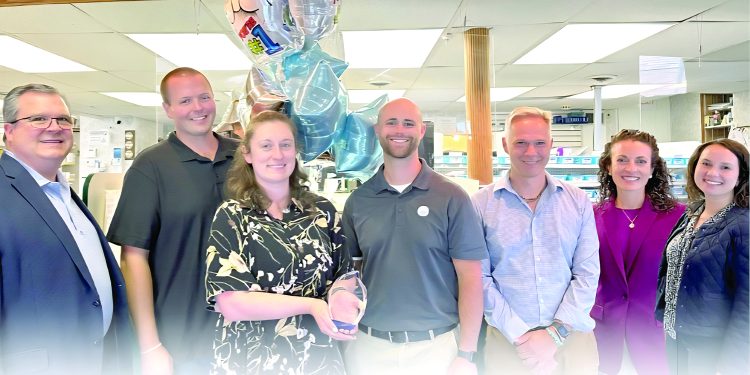



If you’re like most of the population, Academic Detailing is a foreign term, but the premise isn’t new. It is simply an evidenced-based educational outreach method. Trained healthcare professionals (such as pharmacists) meet with doctors and clinicians to deliver non-commercial, up-to-date, and unbiased information.
In the early 1980s, researchers at Harvard Medical School noticed a gap between prescribing practices and best evidence-based approaches toward patient treatment.
Large Pharmaceutical companies had discovered the “secret sauce” in gaining access to physicians and influencing their prescribing habits; disseminate highly trained representatives and equipe them with enticing marketing materials to sell product.
Researchers contemplated if these same tactics could be used to promote clinical education materials as opposed to profit motives. Their research would go on to prove the effectiveness of Academic Detailing and its value in improving care for numerous clinical conditions.
In 2022, the Rational Drug Therapy Program, part of the West Virginia University School of Pharmacy, established its Academic Detailing division. Comprised of a team of academic detailer pharmacists, their mission was to provide West Virginia clinicians with the most up-to-date clinical research. The goal was to help increase office efficiency, decrease costs for patients, and enhance long-term outcomes.
The Academic Detailers would present non-commercialized, evidence-based information in a detailing session with the intent of keeping clinicians abreast of current guidelines and best practices.
After discovering somewhat alarming stimulant prescribing trends in West Virginia, a panel of experts from across the state assembled to create what would become the Academic Detailing team’s first educational campaign, the WVACC Guidelines: A West Virginia Guide to Evidence-Informed Evaluation, Diagnosis, and Treatment of ADHD and Comorbid Concerns.
The objective of these guidelines was not to deter clinicians from prescribing stimulants to those who needed them but to emphasize the importance of adequate education and training on the evaluation, diagnosis, and treatment of ADHD.
The team’s pharmacists would be tasked with educating clinicians from across the state, including those in the most rural areas. Thanks to funding from the Centers for Disease Control and Prevention as well as the Maternal and Child Health Services Title V Block Grant, the Academic Detailers could provide various education opportunities for clinicians including continuing education credits, lunch and learns, short key messages, web courses, and more.
The Academic Detailing team has recently shifted its efforts to other topics such as stigma in substance use disorder, medications for opioid use disorder, and exploring how screening, intervention, and referral to treatment can identify risk early and connect patients to appropriate care.
In addition, they are awaiting the release of the revised 2016 WV Safe & Effective Management of Pain Guidelines for detailing, which will reflect the most recent guidance from the CDC in addressing opioid prescribing and risk reduction strategies. They expect the new guidelines to be available in the spring/summer. Continuing education opportunities for the guidelines will also be available to providers.
The Academic Detailing model has proven to be a valuable resource for clinicians and an effective method of positively influencing clinical decision-making for patients. It has expanded to several organizations in the country including the U.S. Department of Veterans Affairs and other state/university programs.
Because of the efforts of organizations like these and the Rational Drug Therapy Program, clinicians are better equipped to make clinical decisions resulting in improved patient safety.