

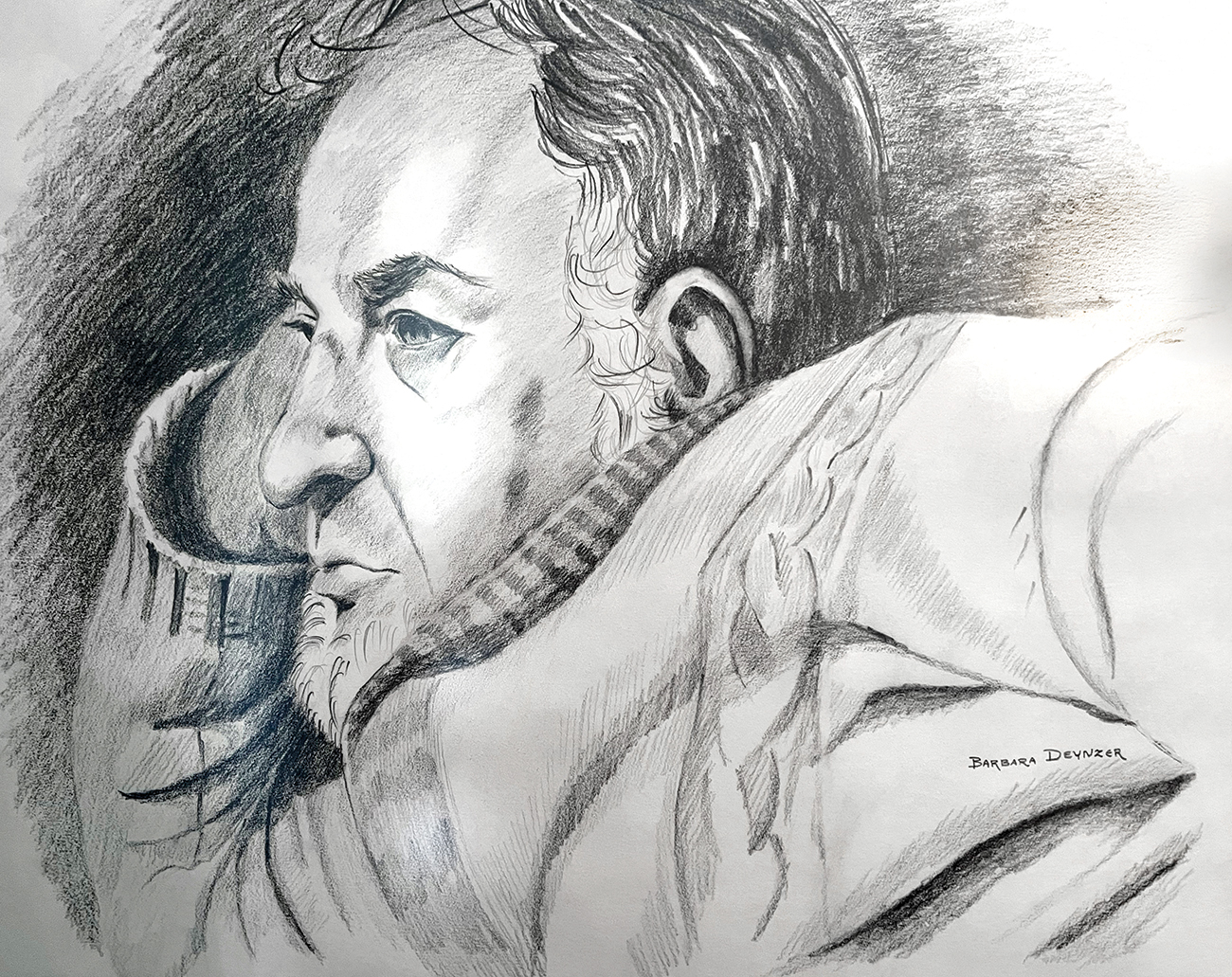
If one were searching for the quintessential image of a twentieth-century small-town physician, one need look no further than Doctor Meyer R. Sonneborn.
Doc Sonneborn arrived in Greene County in 1961 by what many would call providence. He was in Wheeling Hospital for gallbladder surgery and found himself sharing a room with a man from western Greene County. As the man spoke of the desperate need for a doctor in his hometown of Wind Ridge, something stirred in Sonneborn. When he recovered, he began driving out to the area every Wednesday—his lone day off—to see patients.
It did not take long for the hills and the people of the region to claim his heart. Soon he moved there permanently, beginning what would become a lifetime of service to the community. Doc’s daughter-in-law and former office manager, Marcia, remembers him as a man whose skill, compassion, and quiet determination touched generations of lives.
One of her earliest memories concerns her own younger sister, born a month premature in Doc’s office and weighing only four pounds. In an age before neonatal intensive care units were commonplace, the tiny infant was sent home with an oxygen tank and a bassinet provided by the doctor himself. Against the odds, she thrived and grew into healthy adulthood.
By Marcia’s estimate, Doc Sonneborn delivered more than a thousand babies. But his role was never confined to the delivery room. This was the era of cradle-to-grave medicine, and Doc liked to say, he was a “one-stop shop.”
To modern readers, his practice might seem almost unbelievable. His office housed its own laboratory, X-ray machine, and drug room. Many former patients still speak fondly of the cough syrup he compounded himself, adjusting the formula to suit the needs of each individual. Minor surgeries were performed there as well, right in the office.
Yet the place did not feel like the sterile, impersonal clinics of today. Currier & Ives prints adorned the walls, and comfortable furniture softened the room. Patients often remarked that it felt more like a home than a medical office.
Even ten or twelve hours of daily appointments did not end his work. His home stood next door to his office, and the people of Wind Ridge knew they could knock on his door at any hour. And when patients could not come to him, Doc would climb into his car and make the journey to them, traveling country roads in all seasons.
As if this were not enough, Sonneborn also served as the school physician, the team doctor for the Pioneers, and a devoted teacher for medical trainees and EMTs who came to learn from a master of practical medicine. What makes this portrait of compassion and courage even more extraordinary is that Doc carried out these Herculean labors while enduring serious physical trials of his own.
An accident with a fluoroscope in his office left several fingers and a thumb terribly burned by radiation. When it became clear the damaged digits could not be saved, Sonneborn calmly supervised his own staff during the amputation of portions of them.
A childhood accident suffered during a Boy Scout outing took the vision of his left eye. Later he developed severe spinal stenosis, a condition that would have forced many men into retirement. But Doc refused to allow his own suffering to diminish his service to others.
In truth, his devotion lasted until the very end. The day before he died, lying in a nursing home bed, he called in a prescription for a patient who needed help.
The modern world, with its litigation, regulation, and technologies, makes physicians like Doc Sonneborn seem anachronistic. But the difference runs deeper than circumstance. His generation carried within it a profound sense of duty, a work ethic rooted in service, and a conviction that one’s purpose in life was found in caring for others.
And for that reason, the memory of Doc Sonneborn stands not only as a tribute to one remarkable man, but as a quiet reminder of what a life of service can truly mean.